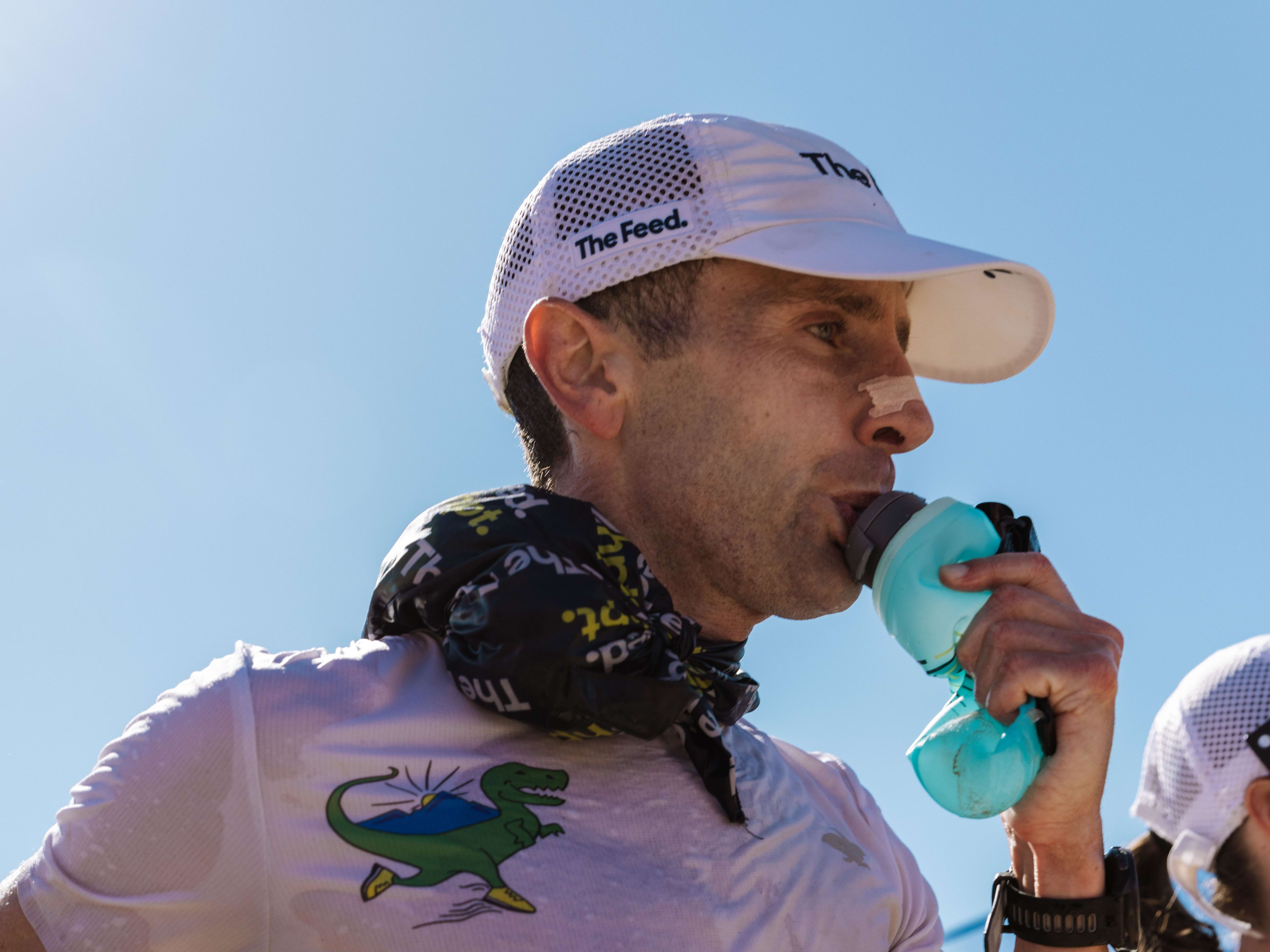
Bobby Julich has seen endurance fueling go from bananas in jersey pockets to 120-gram-per-hour carb protocols engineered by entire nutrition departments. He sits down with The Feed to talk about what's changed in endurance fueling, and what never will.
In 1985, Bobby Julich was handing out Powerbar samples at a Colorado criterium when someone walked up, looked at it, and asked: “Is that dog food?”
That’s where this story starts.
Bobby would go on to finish 3rd at the 1998 Tour de France, only the second American ever on that podium. He took silver at the 2004 Olympics. Then spent decades coaching at the highest level of professional cycling.
But more than anything, he’s been paying attention to fueling—long before most of today’s pros ever thought about it.
We sat down with him to talk about what’s changed over the last 40 years... and what hasn’t.
The Banana Era
When Bobby started racing in the mid-80s, fueling was simple: you brought a banana in your back pocket.
Gatorade was considered advanced. The national team wasn’t thinking about nutrition. And when Powerbar showed up, it looked like kibble and tasted like chalk.
Bobby ate them anyway. Every race. Every stage.
While his teammates ate baguettes, butter, and pastries, Bobby stuck to his routine. His French teammates thought he was strange.
Before It Was Obvious
After one Tour de France stage, Bobby grabbed an energy gel. A teammate looked at him and asked, “Why are you taking that after the race?”
He didn’t have a scientific explanation. It just made sense to him to start recovering immediately.
So he kept doing it.
Post-stage, he’d eat boiled potatoes with salt and olive oil. He’d bring an extra suitcase of nutrition to Europe, because the team’s recovery plan was a baguette.
Years later, at an event in Scottsdale, fellow pro Frankie Andreu brought it up without prompting—Bobby’s pre-race Powerbar habit.
“Now that we know what we know,” Bobby said, “I was on the right track.”
Frankie didn’t hesitate: “Yeah. You definitely were.”
From 90 Grams to 120+
There was a time when 90 grams of carbs per hour was the limit. Any more, and you’d pay for it.
Now, 90 is the floor. 120+ grams per hour is normal.
Multiple carb sources changed everything. Absorption improved. Performance followed.
Bobby spent years working with continuous glucose monitors, testing product after product. The biggest takeaway: metabolism is individual. What works for one athlete doesn’t always work for another.
When he joined Team Sky as a coach, there was one nutritionist, and no one really listened.
Now, WorldTour teams have entire nutrition departments. And they’re some of the most important people on the team.
What Didn’t Change
The fundamentals held.
Fuel before you start.
Stay consistent during.
And recover immediately after.
That recovery window Bobby followed in the 90s—the one he couldn’t fully explain—is the same one teams are engineering around today.
His advice is simple: get the key moments right. Pre-race timing. In-race consistency. The first 60-90 minutes after you finish.
“Overanalysis equals paralysis,” he says.
The basics still work.
What Bobby Uses Today
For long efforts, Maurten is his anchor, especially the 320 Drink Mix. He calls it rocket fuel.
He rotates depending on the day: First Endurance EFS, Enervit Isocarb, Skratch High Carb.
For gels, it’s a mix: SiS Go when he wants something lighter, Amacx or Enervit for higher-carb efforts, doubling up when the work demands it.
Afterward, it’s immediate recovery, SwissRX or whey protein, then a full meal 20–30 minutes later.
The common thread is variety.
“That’s why I love The Feed,” he says. “You can mix it up. If you get tired of one product, you switch. You’ll never get tired.”
Because over 40 years, he’s learned one thing: consistency beats everything. And having options is how you stay consistent.
From dog food jokes... to 120 grams an hour.
Bobby’s been there for all of it.