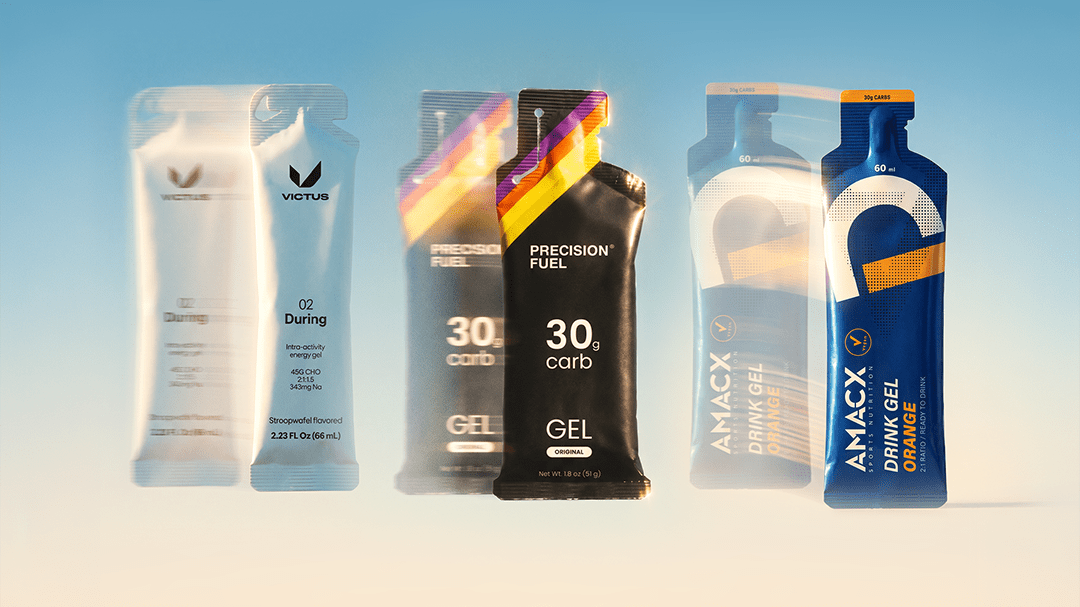
Amacx is one of the most trusted and dominant fueling brands in Europe. Now, it's finding its place across the world and variety of sports. Here's how to use their lineup for optimal fueling.
If you've ever stared at the Amacx lineup (or any lineup for that matter) and thought, "Okay, but what do I actually take?", then this is for you.
Amacx makes great products. But like a lot of European sports nutrition brands, they built an entire system, not just a few standalone items. If you don't understand how the pieces fit together, you end up either under-fueling or randomly grabbing things that don't work together as you wanted.
Whathttps://claude.ai/share/dda9b302-e999-48b9-999d-0d402dd40c13 makes Amacx different from almost every other brand: they designed their entire lineup around one simple rule—every single product in their core energy lines delivers a consistent, predictable number of carbs. That means once you know your hourly carb target, building your fueling plan is just basic math.
Let's break it down.
First: Know Your Target
Before you pick a product, you need to know roughly how many carbs per hour you're aiming for.
Here's a simple starting framework:
Under 60 minutes: 30–45g of carbs per hour (or nothing, depending on intensity)
60–90 minutes: 45–60g of carbs per hour
90 min–2 hours: 60–75g per hour
2–3 hours: 75–90g per hour
3+ hours or race day: 90–120g per hour (gut training required)
The science behind hitting 90g+ per hour comes down to one thing: carbohydrate ratio. Your gut can only absorb about 60g of glucose per hour. But when you pair it with fructose in the right ratio, you open up a second absorption pathway—and suddenly 90–120g per hour becomes possible without GI issues.
That's the foundation Amacx built their entire product lineup on.
The Two Lines: Energy vs. Turbo
Everything in the Amacx world falls into one of two systems:
Energy Line (blue packaging): Uses a 2:1 glucose-to-fructose ratio. Delivers 30g of carbs per product. Designed to get you comfortably to 90g/hour.
Turbo Line (black packaging): Uses a 1:0.8 glucose-to-fructose ratio. Delivers 40g of carbs per product. Designed to push you toward 90–120g/hour for longer, harder efforts where your gut is trained.
Think of the Energy Line as your everyday training workhorse. Think of the Turbo Line as race-day and peak-week firepower.
The Products, Broken Down
Hydro Tabs — Hydration Only, No Carbs
What it is: An effervescent tab you drop in your water. Electrolytes and vitamins only—no carbs, no calories.
When to use it: Before training. At your desk. On easy recovery days. Any time you need to stay hydrated but don't need fuel.
Energy Drink — 30g Carbs Per Bottle
What it is: A powder you mix into 500ml of water. One bottle = 30g of carbs delivered in a 2:1 glucose-to-fructose ratio, plus sodium and magnesium.
When to use it: During workouts longer than 90 minutes as your hydration + base carb foundation. This is the backbone of your fueling bottle—sip it steadily throughout your effort rather than drinking it all at once.
The math: One bottle per hour = 30g of carbs. Pair it with one Drink Gel and you're at 60g. Add a second gel or a Fast Bar and you're at 90g.
Drink Gel (Energy Line) — 30g Carbs Per Gel
What it is: A 60ml drinkable gel. No water needed. 30g of carbs in the same 2:1 ratio as the Energy Drink. Clean, easy to take on the move.
When to use it: As your carb "power-ups" during training and racing. Take one every 20–30 minutes alongside your drink to hit your hourly target. Easy to slot in during a run when you can't easily manage a full bottle.
The math: Two gels per hour = 60g of carbs. Three gels = 90g. Simple.
Fast Bar — 30–32g Carbs Per Bar
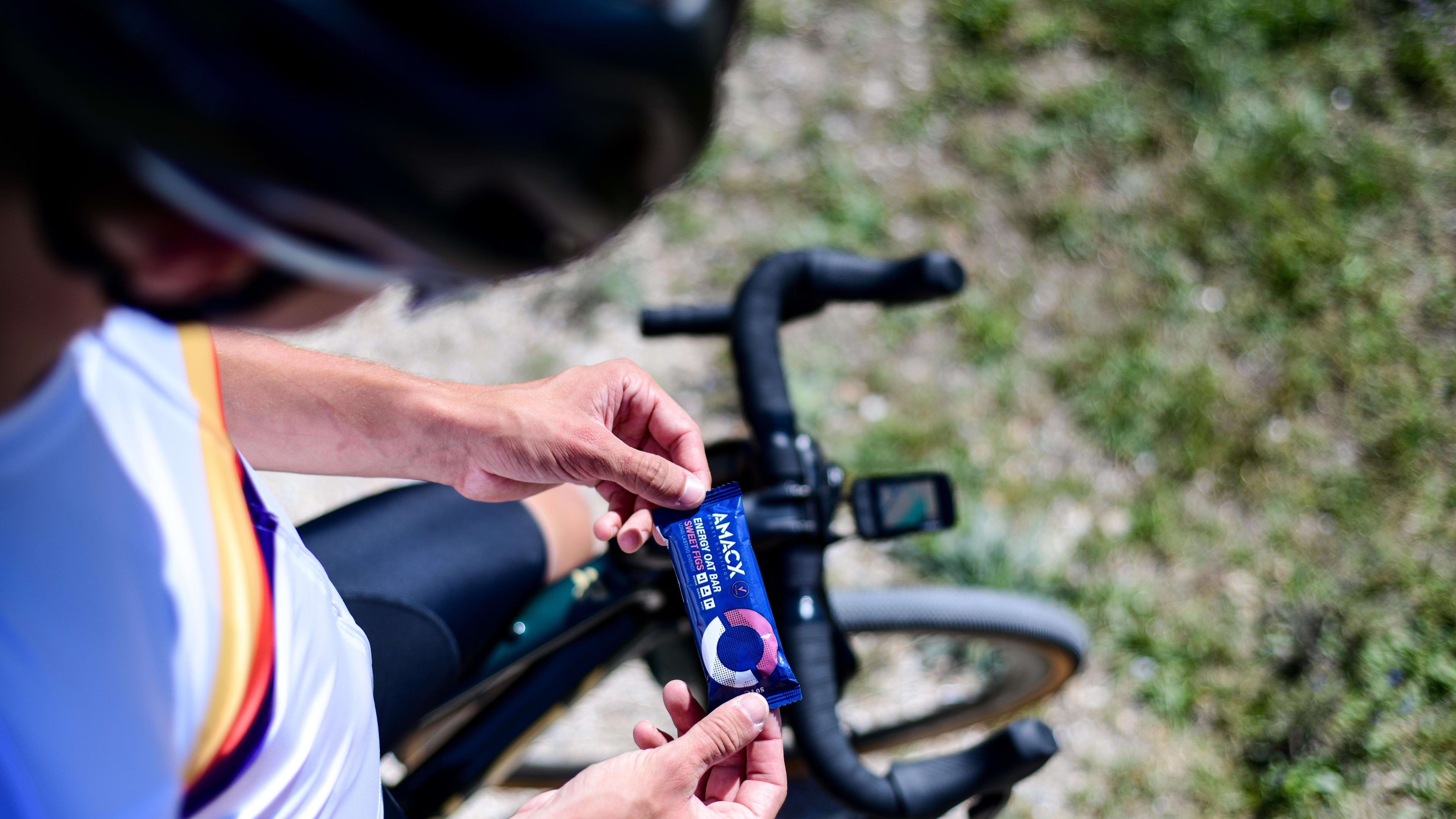
What it is: A soft, easy-to-chew energy bar. Real food texture with a 2:1 carb ratio. Gluten-free and lactose-free. About 30–32g of carbs per bar.
When to use it: Pre-workout fueling in the 30–60 minutes before your session starts. Or during longer, lower-intensity efforts (a long easy ride, a hiking day) where you want something more substantial than a gel but your heart rate isn't so high that chewing becomes a problem.
When You Shouldn't Use it: During high-intensity intervals or race efforts above threshold. When your heart rate is elevated and your effort is at or near max, solid food is hard to process. That's when you shift to gels and drink mix. Save the bars for the easy stuff—or for before you start.
Turbo Drink — 40g or 80g Carbs Per Bottle (Adjustable)
What it is: Same concept as the Energy Drink but built for higher-output situations. Uses the 1:0.8 ratio for maximum absorption and can be mixed at either 40g or 80g of carbs per 500ml bottle, depending on your needs.
When to use it: Long races, big training days, any effort where you've gut-trained and are targeting 90–120g of carbs per hour.
The math: One bottle at 80g per hour + one Turbo Gel = 120g per hour.
Turbo Gel — 40g Carbs Per Gel
What it is: A 60ml drinkable gel with 40g of carbs and 200mg of sodium. Available in regular and caffeinated versions (100mg caffeine). Uses the 1:0.8 ratio.
When to use it: During intense or long-duration efforts, races, or events when you need to stack carbs fast.
The math: One Turbo Gel + one bottle of Turbo Drink (40g) = 80g of carbs from just two products. Add another gel and you're at 120g/hour.
Use the caffeinated Cassis version strategically—not every hour, but at key moments: 30 minutes before a hard section, during the run when fatigue peaks, or to break through a mental wall late in a race.
Cherry Juice — Recovery, Not Fueling
What it is: Concentrated tart cherry juice. Used by Team Visma-Lease a Bike and EF Pro Cycling. Each 500ml bottle delivers 100mg of anthocyanins plus 30g of fast-absorbing carbs.
When to use it: Immediately post-workout for recovery. Or as part of a pre-event loading protocol—research suggests drinking it daily for 4–7 days before a big event (not just after) to maximize the anti-inflammatory effect.
When You Shouldn't Use it: As a mid-workout fuel source. Yes, it has some carbs, but the purpose of cherry juice is recovery and reducing muscle damage markers, not powering your effort. Keep it in the fridge for after.
Spotlight: Amacx Beet Shot — Performance, Not Fueling
One more product worth knowing about — and it doesn't fit neatly into the fueling system above because it's not about carbs. It's about performance.
The Amacx Beet Shot is a 60ml ready-to-drink shot with 500mg of nitrates per serving. That's a higher nitrate dose than most beet products on the market, and the flavor is genuinely good — which matters more than you'd think if you've ever choked down a competitor's shot.
The science, simplified: your body converts the nitrate in beets to nitric oxide. Nitric oxide dilates your blood vessels. More blood flow means more oxygen reaching your working muscles. You stay aerobic longer. The pace that used to bury you starts to feel sustainable.
It's sports legal — NZVT certified (Dutch anti-doping) — and at 41 calories and under 1g of sugar, it won't interfere with your fueling plan.
How to use it:
Take 1–2 shots, 2–3 hours before your workout or race. That timing window is important — nitrate conversion takes time, so don't take it 20 minutes before the gun and expect a result.
For best results, stack it with SwissRX Nitric Oxide Pro (2 capsules every morning). The Beet Shot gives you the acute performance spike before a hard effort. Nitric Oxide Pro gives you the daily baseline. Together, you get both.
This isn't just a race-day product. You build fitness by pushing your limits in training. A performance booster like Beet Shot lets you push harder, go longer, or both — and that extra output is what makes you fitter when race day actually arrives.
Putting It Together: Three Scenarios
60-Minute Training Session
Goal: 30–45g of carbs per hour, stay hydrated
Plan:
Pre-workout: Hydro Tab in 500ml of water, sip before you start
During: One Drink Gel (30g) around the 20–30 minute mark
Post: Hydro Tab or water to rehydrate
Total carbs: ~30g. Clean and simple. No need to overthink it for shorter sessions.
2-Hour Ride
Goal: 60–75g of carbs per hour
Plan:
Pre-workout: Fast Bar 30–45 minutes before you roll out
Hour 1: One bottle of Energy Drink (30g) sipped throughout + one Drink Gel (30g) = 60g
Hour 2: Same combo, or swap the Energy Drink for a Turbo Drink at 40g and pair with one Turbo Gel (40g) = 80g if you're pushing hard
Total carbs: 120–140g across the session. This is the sweet spot for most amateur athletes on a medium-long training day.
70.3 Race Day
Goal: 75–90g of carbs per hour (or higher if gut-trained)
Plan:
Night before: Standard carb-loading meal, no need to overdo it
Race morning (2 hours out): Fast Bar + small meal
30 minutes before swim start: One Turbo Gel (40g) for a quick top-up
On the bike:
Turbo Drink mixed at 80g per 500ml bottle — one bottle per hour
One Turbo Gel every 45–60 minutes = 40g
Per hour on bike: 80g (drink) + 40g (gel) = 120g/hour if gut-trained, or drop the drink to 40g for a more conservative 80g/hour
On the run:
Turbo Gels only — one every 30–40 minutes
Caffeinated Cassis version at the halfway point and again at mile 10
Post-race:
Cherry Juice immediately after the finish line
Recovery shake within 30 minutes
The One Rule That Makes This Simple
Every product in the Energy Line = 30g of carbs. Every product in the Turbo Line = 40g of carbs.
That's it. Once you know your hourly target, the math writes itself:
Need 60g/hour? Two Energy Line products.
Need 90g/hour? Three Energy Line products — or two Turbo Line products + one Energy product.
Need 120g/hour? Three Turbo Line products. (Gut training required.)
The color coding (blue = Energy, black = Turbo) tells you everything you need to know at a glance. No label-reading during a race. No math on the run. Just grab the right color and go.
That's the system. Use it.