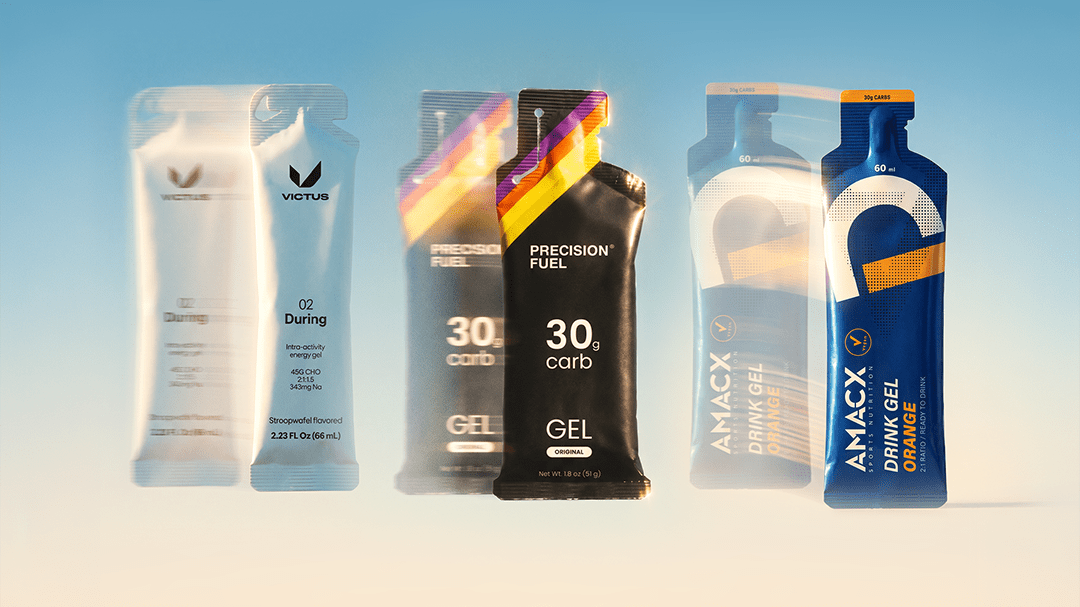
When you're sweating through a workout, you're not just losing water; you're losing crucial electrolytes. Sodium is the main driver here, and that's why hydration drinks are so focused on it. But where is the sweet spot?
When you're deep into a long run, a hard interval ride, or a multi-hour training block, your body isn't just losing water. It's losing sodium — and at a rate that can quietly wreck your performance before you even realize what's happening.
Sodium is the primary electrolyte lost through sweat, and it does a few things that are critical: it helps your body actually hold onto the fluid you're drinking, supports muscle contractions and nerve function, and keeps blood volume up so oxygen can keep reaching your working muscles. Sweat also contains chloride, potassium, magnesium, and calcium — but sodium is what moves the needle most.
The catch? How much sodium you need is deeply personal. Some athletes are low-sodium sweaters, losing around 200–400mg per hour. Others can blow past 1,000mg per hour in the heat. That gap is why the flat 150mg you get from Gatorade or Powerade leaves a lot of athletes under-fueled and under-hydrated for serious training — especially once you're past 90 minutes and the temperature climbs.
What the Research Actually Recommends
Sports science guidelines peg the target range at 300–400mg of sodium per serving for moderate-to-heavy sweat losses — no less than 500mg per liter. That's the threshold where you start to meaningfully replace what you're losing, rather than just sipping flavored water.
Many options on the market get there via low-sugar tablets or mixes. Options like Skratch Unsweetened, Precision Tabs, Nuun Sport, and more. All hit >300mg per serving, which is solid, but it's electrolytes only with minimal-to-no sugar. That works well for easy sessions under 60 minutes. For longer efforts where you need fuel alongside your hydration, cost and complexity can add up for athletes.
That's the gap The Feed Lab High Carb Drink Mix was built to fill.
Why Sodium and Carbohydrates Work Better Together
Here's something worth understanding: sodium and carbohydrates don't just coexist in a sports drink — they actively help each other get absorbed. When glucose and sodium travel through the gut wall together, absorption is faster and more complete than with either one alone. It's the reason high-carb fueling and electrolyte replacement should happen in the same bottle on long days, not as two separate products.
For efforts under 60 minutes, a sugar-free electrolyte tab is a perfectly reasonable choice. But once you're past that mark — a long ride, a marathon training run, a big HYROX simulation workout — you need both working together. The science is clear on this.
Why High-Carb Drink Mixes Have Less Sodium Than Pure Hydration Products
This is a question worth addressing directly, because it trips up a lot of athletes when they're comparing labels.
Dedicated hydration products — electrolyte tabs, hydration-only powders — can load up on sodium because that's their entire job. There's no carbohydrate load to manage, so sodium can be pushed to 500mg, 700mg, even 1000mg per liter without creating problems. LMNT, for example, sits at 1000mg per stick precisely because it's a sodium-first product with no fueling role.
High-carb drink mixes have to play a more balanced game. Here's why:
Osmolality. When you mix high concentrations of both carbohydrates and sodium into the same solution, the resulting osmolality — essentially how "heavy" the fluid is — can exceed what your gut handles efficiently. A hypertonic solution sits in the stomach longer and draws fluid into the gut rather than allowing it to be absorbed. That's the opposite of what you want during a long effort.
Absorption dynamics. Sodium and glucose share the same intestinal transport pathway, which is why they work well together. But that relationship has a ceiling. More sodium doesn't keep unlocking more absorption indefinitely; at high concentrations, it starts competing with carbohydrate uptake rather than supporting it. The 150mg per scoop level in The Feed Lab formula is calibrated to support glucose co-transport without creating that bottleneck.
GI tolerance. This is the practical reality most athletes learn the hard way. High sodium combined with a large carbohydrate load increases the risk of GI distress — bloating, cramping, that urgent feeling mid-race that has nothing to do with your fitness. Keeping sodium at a level that supports absorption without overloading the gut is part of what makes a high-carb mix actually usable at 60 or 90g of carbs per hour.
The practical implication: if you're using a high-carb mix as your primary fuel and you're a heavy sodium sweater, you don't have to choose between fueling and electrolytes. You can supplement with a dedicated electrolyte product alongside your carb mix — a tab in a second bottle, or a sodium capsule — rather than expecting your fuel source to carry all of that load by itself.
The Feed Lab High-Carb Drink Mix: Built Around Flexibility
The Feed Lab High-Carb Drink Mix is formulated on a simple system that scales with your session:
1 scoop: 30g carbs, 150mg sodium
2 scoops: 60g carbs, 300mg sodium
3 scoops: 90g carbs, 450mg sodium
That scalability is the point. A Tuesday tempo run doesn't need the same fueling as a six-hour ride. With most sports nutrition products, you're locked into a fixed formula and just drinking more or less of it. Here, you adjust the dose to match the demand.
The carbohydrate formula uses a 2:1 glucose-to-fructose ratio, which is the ratio research consistently shows maximizes absorption up to 90g per hour while keeping GI distress low. The flavor profile is intentionally neutral — it won't clash with anything you're already using, and it won't cause flavor fatigue on the days when getting calories in starts to feel like a chore.
At two scoops, you're hitting 300mg of sodium and 60g of carbohydrates in a single bottle. That covers the energy gap and the electrolyte gap at once, which is where a lot of athletes are leaking performance without knowing it.
How Do You Know If You Need More Sodium?
Your body is pretty good at giving you signals when sodium replacement isn't keeping up with losses. White salt residue on your kit, cramping at the end of a workout, that heavy fatigue that hits later, or a strong craving for salty food the moment you finish — those are all signs you're on the higher end of the sweat-sodium spectrum.
Hot weather and high humidity accelerate losses significantly. If you're training in the South in July, what worked in March probably isn't cutting it anymore. It's important to adapt.
Need a bit more? The Feed Lab Hydration is actually a great way to add electrolytes to your plan without changing the carbohydrate composition.
Post-Workout Sodium: More Important Than Most Athletes Realize
Recovery hydration isn't just about getting fluid back in. Sodium is what tells your kidneys to hold onto that fluid rather than excrete it. Without adequate sodium, you can drink plenty and still stay dehydrated longer than you should.
Two scoops post-workout gives you 300mg of sodium alongside 60g of carbohydrates to start restoring muscle glycogen — making it a practical all-in-one recovery option rather than requiring a separate recovery product stacked on top of your electrolytes. Yes, you can use this as an easy way to refuel if your gut isn't happy post-race.
One More Thing Worth Noting
At $20 a bag, The Feed Lab High Carb Drink Mix is significantly more affordable than most high-carb drink mixes, which typically run $40 or more. That matters in practice — because when nutrition is expensive, athletes start rationing it. And rationing your fuel is a great way to have bad training days.
The point has always been that the right nutrition at the right time helps you train better, recover faster, and actually enjoy the process. A high-carb mix that reaches 300mg sodium at two scoops, scales with your effort, and doesn't cost a fortune to use every session is as close to the right tool for the job as we've found.
FAQ
What happens if I consume too much sodium during exercise? Excess sodium without enough fluid can cause bloating, increased thirst, and GI discomfort. For most athletes using two scoops during sessions over 90 minutes, 300mg is well within a safe and effective range. Match sodium intake to your sweat losses and session length.
How do I know if 300mg sodium is right for my sweat rate? White salt residue on your kit, cramping, or strong post-workout salt cravings are the clearest indicators that your sodium needs are on the higher end. Two scoops of The Feed Lab formula gets you to exactly 300mg, which covers most moderate-to-heavy sweat scenarios.
Do different sports require different sodium levels? Yes — sport type, session duration, intensity, and individual sweat rate all affect how much sodium you need. The flexible scoop system makes it easy to adjust up or down based on the demands of any given session.
Can I use The Feed Lab High Carb Drink Mix for both fueling and hydration? Yes, and that's its core strength. Two scoops gives you 60g of carbohydrates and 300mg of sodium together — energy and electrolyte replacement in a single bottle, without GI distress.
How should I start using it? Start on your longer or harder sessions where sodium and carb demands are highest. Mix two scoops in 20–24 oz of water and adjust from there based on session intensity, duration, and conditions.