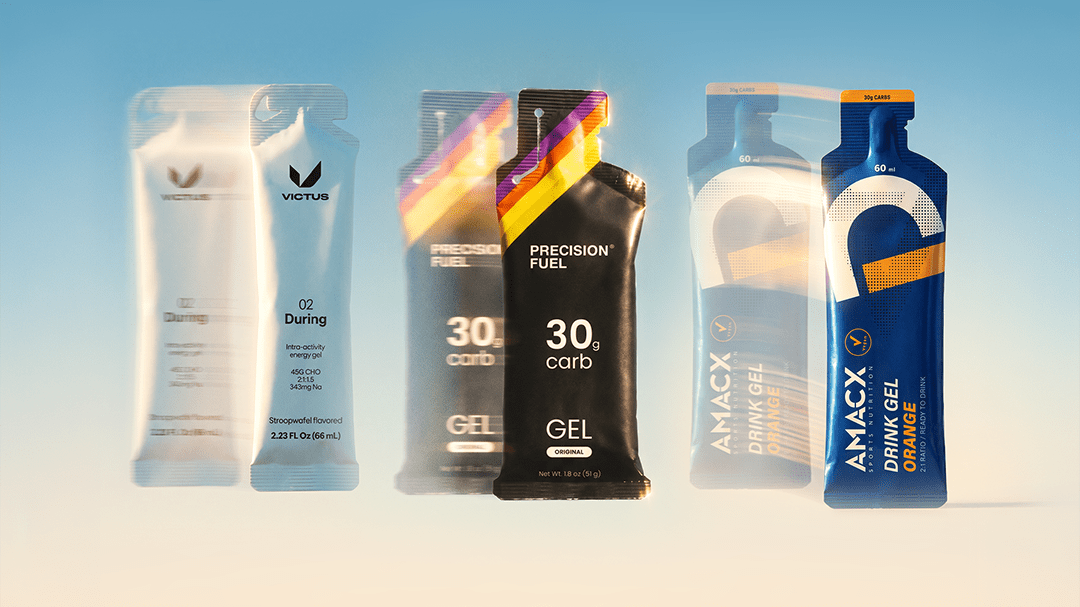
This guide breaks down the physiology, the product landscape, and the practical steps you need to get the most out of a fast-absorbing carb drink during endurance training and racing.
Most athletes know they need carbohydrates during long efforts. Fewer understand why some carb drinks seem to vanish into your system and keep you moving, while others sit in your stomach like a brick. The difference comes down to absorption, and once you understand the mechanics, your fueling choices become a lot clearer.
Your Gut Has a Speed Limit (And a Workaround)
The small intestine absorbs glucose through a transporter called SGLT1. The problem is that SGLT1 has a ceiling. Once you hit roughly 60 grams of carbohydrate per hour, that pathway becomes saturated and any additional glucose you consume simply does not get oxidized at a useful rate. For years, this was the accepted upper limit of carbohydrate fueling.
Then researchers identified something useful: fructose travels through an entirely separate transporter called GLUT5. Because GLUT5 operates independently of SGLT1, consuming fructose alongside glucose opens a second absorption lane. The two pathways run in parallel, and together they allow your body to absorb and oxidize significantly more total carbohydrate per hour than either sugar could achieve alone.
This dual-transporter approach is the foundation of modern high-carb endurance fueling. It is not a marketing concept; it is basic intestinal physiology backed by decades of peer-reviewed research.
How Much Can You Actually Absorb?
With a well-formulated glucose-fructose drink and a trained gut, most athletes can process 90 grams of carbohydrate per hour. Some research, including data cited by the Gatorade Sports Science Institute, suggests that intakes approaching 120 grams per hour are achievable when glucose and fructose are combined in a 1:0.8 ratio and the athlete has systematically trained their gastrointestinal system to handle the load.
For context, a single gram of carbohydrate provides 4 calories. At 90 grams per hour, you are delivering 360 calories of fast-acting fuel directly into your working muscles. That is a meaningful difference from the 240 calories per hour ceiling that single-source glucose drinks impose.
The Ratio Question: 2:1 vs. 1:0.8
The 2:1 glucose-to-fructose ratio became the industry standard because early research showed it was the sweet spot between maximum absorption and palatability. A 60g glucose plus 30g fructose formula adds up to 90g total, which matched the theoretical absorption ceiling neatly. But that's not neccessarily the ceiling — as we see elite athletes using this to reach 100g, 120g, and more.
More recent work has complicated the picture. Studies examining ratios closer to 1:0.8 (fructose to glucose) suggest that this configuration may drive slightly higher muscle carbohydrate utilization during extreme endurance efforts. One analysis found that 110 grams of carbohydrate per hour in a 1:0.8 ratio produced greater muscle uptake than the same intake at 2:1.
The practical takeaway: for most endurance athletes training at moderate-to-high volumes, a 2:1 product delivers proven, well-documented performance benefits. The 1:0.8 refinement matters most for elite athletes consuming very high carbohydrate loads over multi-hour efforts. Either way, the core principle is the same: you need both glucose and fructose in your drink.
Concentration: Why It Matters More Than You Think
A drink's carbohydrate concentration affects how quickly it clears the stomach and enters the small intestine. Highly concentrated solutions slow gastric emptying, which delays fuel delivery and increases the risk of GI distress.
Research generally recommends a 6 to 10 percent carbohydrate concentration for endurance use. A 6 percent glucose solution or an 8 to 10 percent glucose-fructose mixture tends to clear the stomach efficiently while still delivering meaningful fuel. Going much higher than that, particularly with single-source glucose drinks, has been shown to reduce fluid delivery and increase GI complaints.
Some newer formulations use highly branched cyclodextrins, which are modified high-molecular-weight carbohydrates with very low osmolarity. Their structural properties allow them to pass through the stomach quickly despite delivering a significant carbohydrate payload, which reduces bloating and discomfort at higher intake rates.
Gut Training: The Variable Most Athletes Ignore
Even with a perfectly formulated drink, your gut has to learn to handle high carbohydrate loads during exercise. Blood is redirected away from the digestive system during intense effort, which reduces absorptive capacity. Athletes who regularly train with carbohydrates adapt at the cellular level; studies show that SGLT1 and GLUT5 transporter activity increases with consistent carbohydrate intake during exercise.
One well-designed study had participants run at 60 percent VO2max for 60 minutes while consuming 30 grams of carbohydrate at 0, 20, and 40 minutes during each session, for ten sessions over two weeks. The result was a significant reduction in GI discomfort and measurable improvement in endurance performance. The gut responded to the training stimulus, just like a muscle does.
A separate study found that following a high-carbohydrate diet (6.5g per kilogram of bodyweight per day, with supplemental carbohydrate during training) for 28 days increased exogenous carbohydrate oxidation rates compared to a control diet. The gut adapted to process more fuel.
The practical protocol: start at 30 to 45 grams of carbohydrate per hour during training sessions and increase by 10 to 15 grams per hour every one to two weeks, provided you tolerate each step well. Give yourself four to eight weeks before expecting to hit 90 grams per hour comfortably.
Duration-Based Fueling Guidelines
Your carbohydrate needs during exercise scale with session length and intensity. Here is a straightforward framework:
Under 60 minutes: Carbohydrate intake has minimal impact on performance for most athletes, but can still be advantageous. A mouth rinse or small amount of carbohydrate may provide a central nervous system benefit, but a full carb drink is generally unnecessary.
60 to 90 minutes: A single carbohydrate source at 45-60grams per hour is sufficient. Glycogen stores are not yet critically depleted, but topping them up supports the latter portion of the session.
90 minutes to 3 hours: This is where dual-transporter formulas earn their place. Target 60 to 90 grams per hour using a glucose-fructose product. Energy stability and late-session performance are both meaningfully improved.
3 hours and beyond: Maximum fueling becomes a priority. Work toward 90 grams per hour or higher if your gut training supports it. Consistent delivery every 15 to 20 minutes is more effective than sporadic larger doses.
Electrolytes: The Missing Piece in High-Carb Fueling
High-carb drink mixes are designed to optimize fuel delivery, not necessarily to cover your full electrolyte needs. If you are a heavy sweater or training in heat, the sodium content in most carb-focused mixes will not be sufficient on its own.
Sodium is the primary electrolyte lost in sweat and the one most directly tied to fluid retention and cramping risk. Salty sweaters may need to add a dedicated electrolyte product alongside their carb drink. Something like LMNT Electrolytes or Mortal Hydration pairs well with high-carb mixes because they provide substantial sodium without adding carbohydrates, letting you control each variable independently.
Think of your fueling plan as having two separate tracks: one for carbohydrate delivery and one for hydration and electrolyte replacement. They overlap but are not interchangeable.
Product Recommendations
The Feed Lab High-Carb Drink Mix
The Feed Lab High-Carb Drink Mix is built around the research-backed 2:1 glucose-to-fructose ratio, with clean carbohydrates and a light flavor profile that does not compete with gels or other foods you might be consuming alongside it. It is NSF certified, which means third-party tested for purity and label accuracy. Dosing is flexible; you can scale from 30 grams per hour for moderate sessions up to 90 grams or more for long efforts. For athletes who want a no-frills, science-driven carb drink they can rely on in training and on race day, this is the starting point.
Maurten Drink Mix 320
Maurten Drink Mix 320 delivers 80 grams of carbohydrate per sachet using a hydrogel technology that encapsulates the carbohydrates and allows them to pass through the stomach quickly. The neutral flavor is polarizing but functional. It is a premium product that performs at the highest level; many professional athletes use it as their primary race-day drink.
Cadence 500 Sachets
Cadence 500 Sachets offer a high-carbohydrate option for athletes who want maximum fuel delivery in a convenient single-serve format. A solid choice for long training days when you want to practice high-carb fueling without the complexity of mixing from bulk.
Building Your Fueling Practice
The most common mistake athletes make with fast-absorbing carb drinks is treating them as a race-day-only tool. The gut adaptations that allow you to absorb 90 grams per hour comfortably take weeks to develop. If you only practice high-carb fueling in competition, you are racing with an untrained digestive system.
Build the habit in training first. Use your target race-day product and dosing strategy during your longest weekly sessions. Track how your gut responds. Adjust concentration and timing based on real feedback from your body, not just the label recommendations.
Individual variation is real and significant. Athletes differ meaningfully in their carbohydrate absorption capacity, blood glucose response, and GI tolerance. What works well for one athlete may cause distress for another at the same dose. Treat the research-based guidelines as a starting point, not a prescription.
For athletes who prefer solid fuel alongside their drink, GU Roctane Gel integrates cleanly into a mixed fueling strategy without overlapping uncomfortably with a carb drink.
Frequently Asked Questions
How quickly will I notice a difference after switching to a dual-transporter carb drink?
Energy stability during the final third of long sessions is usually the first thing athletes notice, often within two or three training sessions. Gut adaptation to higher carbohydrate loads takes longer, typically four to six weeks of consistent practice.
Is a fast absorbing carb drink worth using for workouts under 90 minutes?
For sessions under an hour, carbohydrate intake has little measurable effect on performance and plain water or electrolytes are sufficient. Between 60 and 90 minutes, a moderate carbohydrate dose (30 to 45 grams per hour) can support the back half of the session. The clearest benefits appear at 90 minutes and beyond.
What is the practical upper limit for carbohydrate absorption?
For most trained athletes using a glucose-fructose formula, 90 grams per hour is a realistic ceiling. Some research supports intakes up to 120 grams per hour under optimal conditions (a 1:0.8 fructose-to-glucose ratio, a trained gut, and consistent delivery). Reaching that level requires a structured progression over several weeks.
Do I need to mix my carb drink at a specific concentration?
A 6 to 10 percent carbohydrate concentration is the evidence-based range for efficient gastric emptying and absorption. Mixing too concentrated a solution slows stomach clearance and increases GI distress risk. Follow the product's recommended dilution guidelines as a baseline and adjust based on your tolerance and the intensity of the session.
What if I experience stomach issues when I increase my carbohydrate intake?
GI discomfort when increasing carb intake is common and usually temporary. Reduce your dose back to the last comfortable level and hold there for an additional week before trying to increase again. Make sure your drink concentration is not too high, space your intake across regular intervals rather than taking large boluses, and confirm you are training with the product consistently rather than only on hard days.