The basics aren't flashy, but they're what Dennis believes hold the magic. Here's a look inside how a 10-time national champion thinks about identity, training, and the fuel that keeps him going.
For a long time, I tied my identity to what I did: the uniform, the results, the outcomes. Marine. Athlete. The next race, the next podium. That worked — until it didn't. Over time, especially after everything I've been through, I've learned that identity has to be broader than performance. These days, the biggest part of my identity is being a dad. Everything else — athlete, speaker, executive coach — sits on top of that. I'm still deeply driven, but now it's anchored in who I am for my family, my community, and my journey.
That shift changed how I think about resilience, too. I used to think it was about pushing harder, ignoring pain, grinding through. Now I see it as something more sustainable: being honest about where you are, taking care of yourself, and still showing up with intention. Less about toughness, more about awareness and consistency. It's not a softer version of the work — it's a smarter one. I talk about this in my TEDx talk — check it out here: Dennis's TEDx Talk. If it resonates, give me a follow on Social Media and LinkedIn. :)
That philosophy has a name in my world: the brilliance in the basics. And everything I do — how I train, how I fuel, how I compete — runs through it.
Earning Your Place
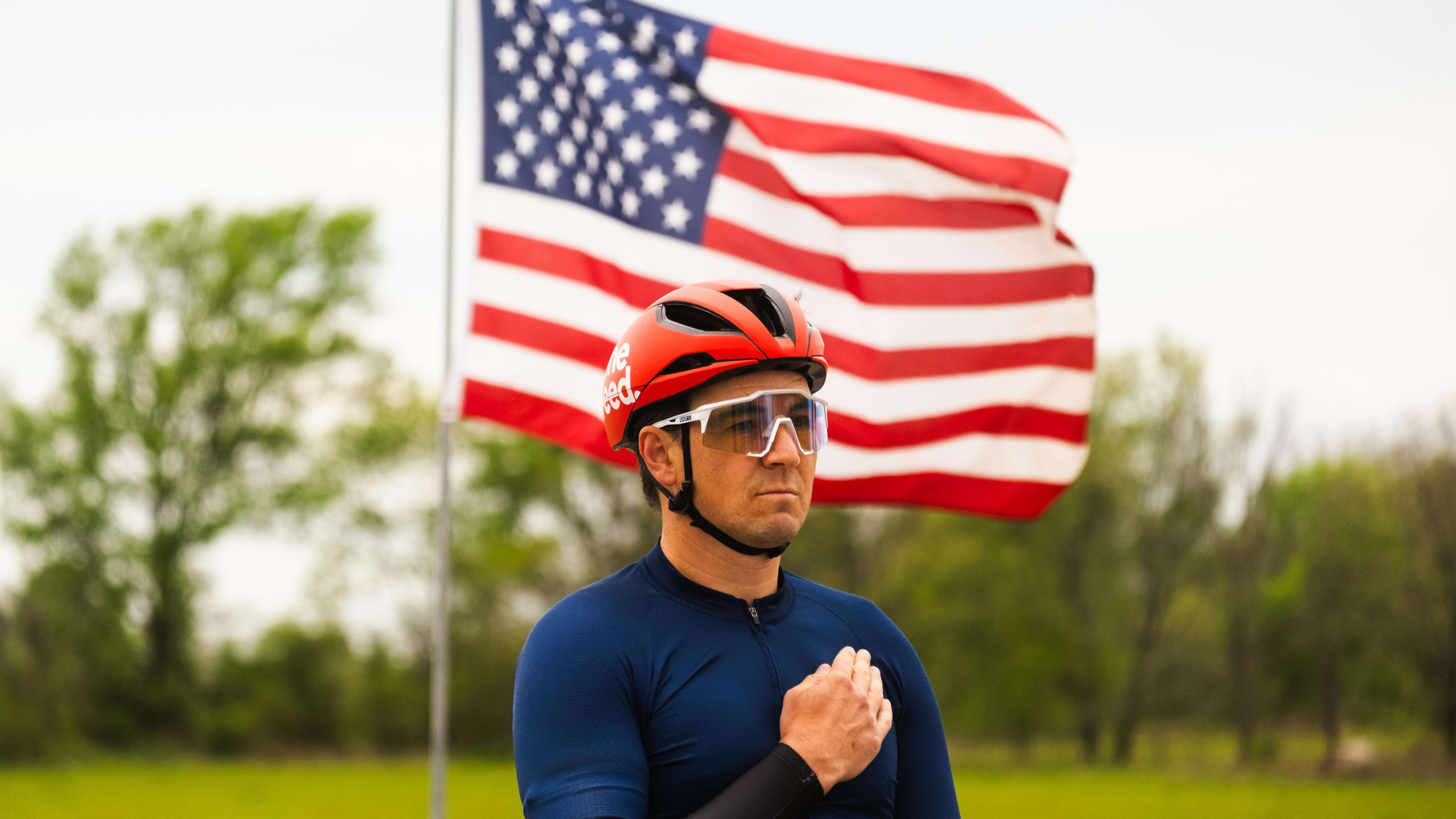
A lot of people have noticed the HPT athletes rocking the blue and neon The Feed helmet. I love wearing it in time trials. But in road races, I'm in a red helmet with The Feed logo. Blasphemy, right?
Actually, it's required by the UCI in paracycling. Helmet color designates classification — it tells officials which sport class each athlete belongs to based on how their impairment affects performance. When multiple classes race together, the colors keep things fair and accurate. It's a detail most people outside the sport never think about.
But on the world stage, wearing that color — representing everyone with a similar disability — it means something. It's a reminder that the work matters, the details matter, and that you've earned your place there. That's the basics. Showing up, doing the work, and letting the results speak.
What the Basics Actually Look Like
From the outside, success at this level probably looks like big moments. Day-to-day, it's simpler: structure, discipline, consistency. I block my day carefully — family first in the morning, then I clear the mental and physical space to train with full focus. When it's time to go, it's 100% in. No distractions.
It's not the flashy sessions that make the difference. It's the consistent execution of the fundamentals over time. Sleep, nutrition, recovery, and showing up when you don't feel like it. That's it.
My training reflects this. Early on I leaned heavily on intensity — pushing limits, more is more. At first my body could barely handle an hour a few times a week. Over time, by genuinely nailing the basics and dialing in nutrition, I've built into longer, more intentional sessions. I listen to my body more, I recover better, and I've accepted that long-term performance comes from stacking good days, not forcing great ones.
Fueling the Foundation
Nutrition is where the basics show up most clearly — and where a lot of athletes cut corners they don't realize they're cutting.
A normal training day looks simple: I like oats and add in a scoop of protein powder. I like BPN's Whey protein for this, and they are a Veteran-Owned company! I usually train mid-morning, so I don't eat too much, but make sure I am fueling my rides. I am no spring chicken, so I take The Feed Foundations, Swiss RX Nitric Oxide Pro, and Optygen HP.
During training, I'm very intentional about staying fueled. I am a huge Skratch Labs fan and use their Hydration mix and a scoop of the Skratch Labs Super High-Carb or The Feed Lab High-Carb mix. That usually gets me through my workouts. If I have a longer ride, I like to add in a bit of protein during the ride with a Styrkr Bar+.
After training, recovery nutrition is really the magic bullet. That's where you set up the next session. And mine is — wait, you thought I was going to tell you?!
But I do really love the Enervit Magic Cherry (it's almost like my legs completely reset when I take it) and Skratch recovery. Then I make sure to have a protein shake in the afternoon to top up. The rest of the day is built around real food, meals with my family, and keeping things sustainable. I'm not trying to be perfect — I'm trying to be consistent. I also hydrate constantly with Mortal or Skratch everyday.
At bedtime, I take Pillar Triple Magnesium, Swiss RX Daily Recovery and Immunity Defense — because I'm a high mileage vehicle, so I need the anti-inflammatories of the Daily Recovery, and I have kids who like to bring home germs from elementary school. I have no problems falling asleep and Pillar is an incredible aid in helping me stay asleep.
Race Day: Trust What You've Built
Nationals was no different from any other training week — that's the point.
I topped off with carbs and protein before racing, stayed on top of hydration, and kept everything simple and repeatable. On race day you don't want to be thinking. You want to trust that everything is already handled. As we always say: NOTHING NEW ON RACE DAY.
The only additions for race days: I make sure to stay on top of hydration with Mortal Hydration or Skratch, and pre-Time Trial I used Nomio in place of Maurten Bi-Carb. During road races, I keep a bottle of 80 grams of carbs — my races only last around an hour, so it's more like a crit. Then I took my normal recovery of Magic Cherry, Skratch recovery, and a bit later some protein. I was off to the airport, where I may or may not have celebrated two Stars and Stripes jerseys and my 10th national championship win with an adult bevy. But then it was Pillar before bed, and off to training the next day!
That's the basics. And at the highest level, that's enough.