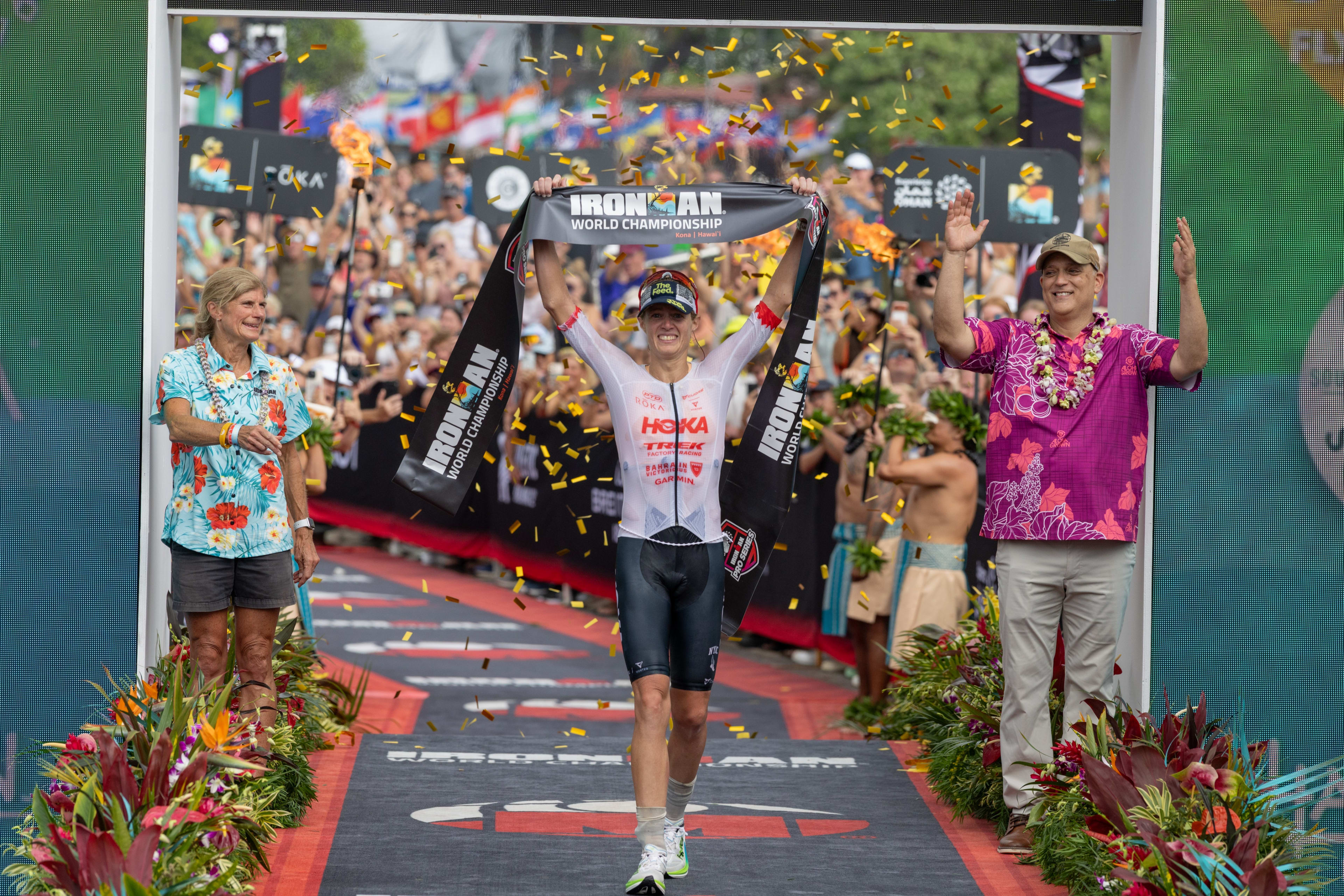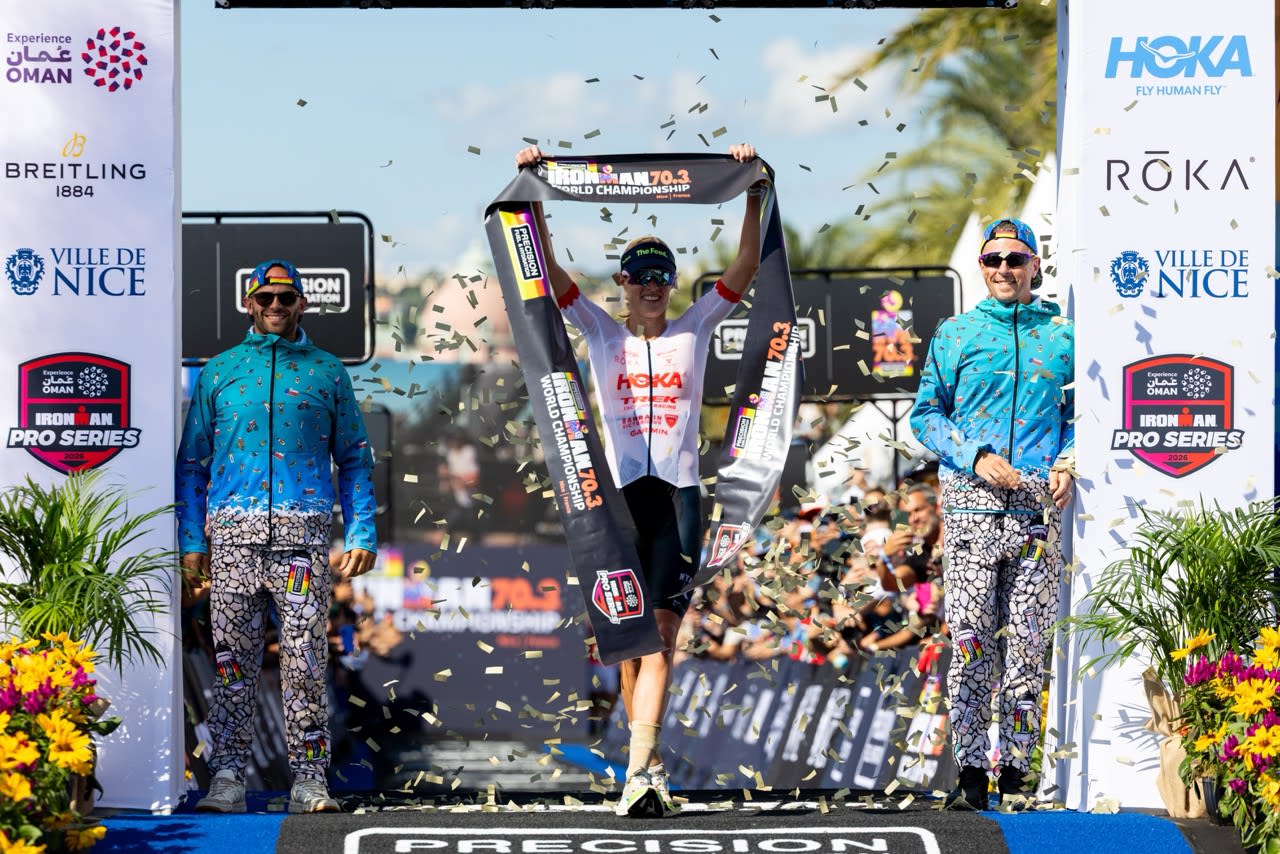
Taylor Knibb just made history in Nice, smashing the course record and bike course record at the IRONMAN 70.3 World Championship to claim her fourth world title. Here's the story behind the race and how the World Champ made it happen.
Taylor Knibb is now a four-time IRONMAN 70.3 World Champion, and her win in Nice might be the best one yet. She smashed the course record by 3 minutes and 40 seconds, set a new bike course record by 1 minute and 31 seconds, both previously held by Daniela Ryf, and moved into second place all-time in 70.3 world titles.
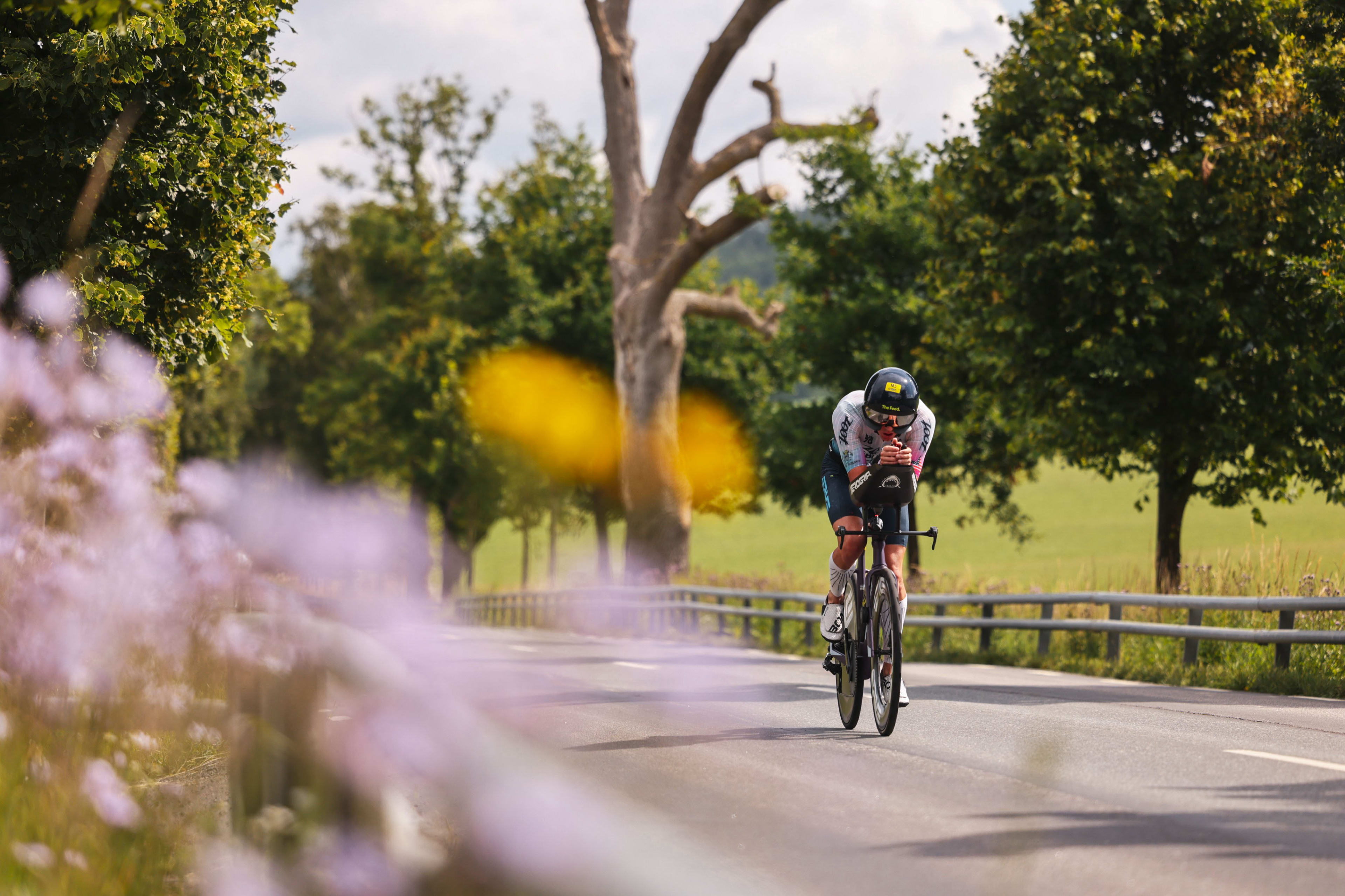
Knibb landed in Nice nine days early to adjust to the time zone and study the Col de Vence, the brutal climb that headlines the bike course. That prep paid off. She came out of the swim near the front, took the race lead early on the bike, and led by 2:11 by the base of the climb. By the summit, after posting a new ascent record of 29:48, her lead had grown to 6:01 — giving her the cushion she needed to handle a technical descent she'd never ridden at race pace before.
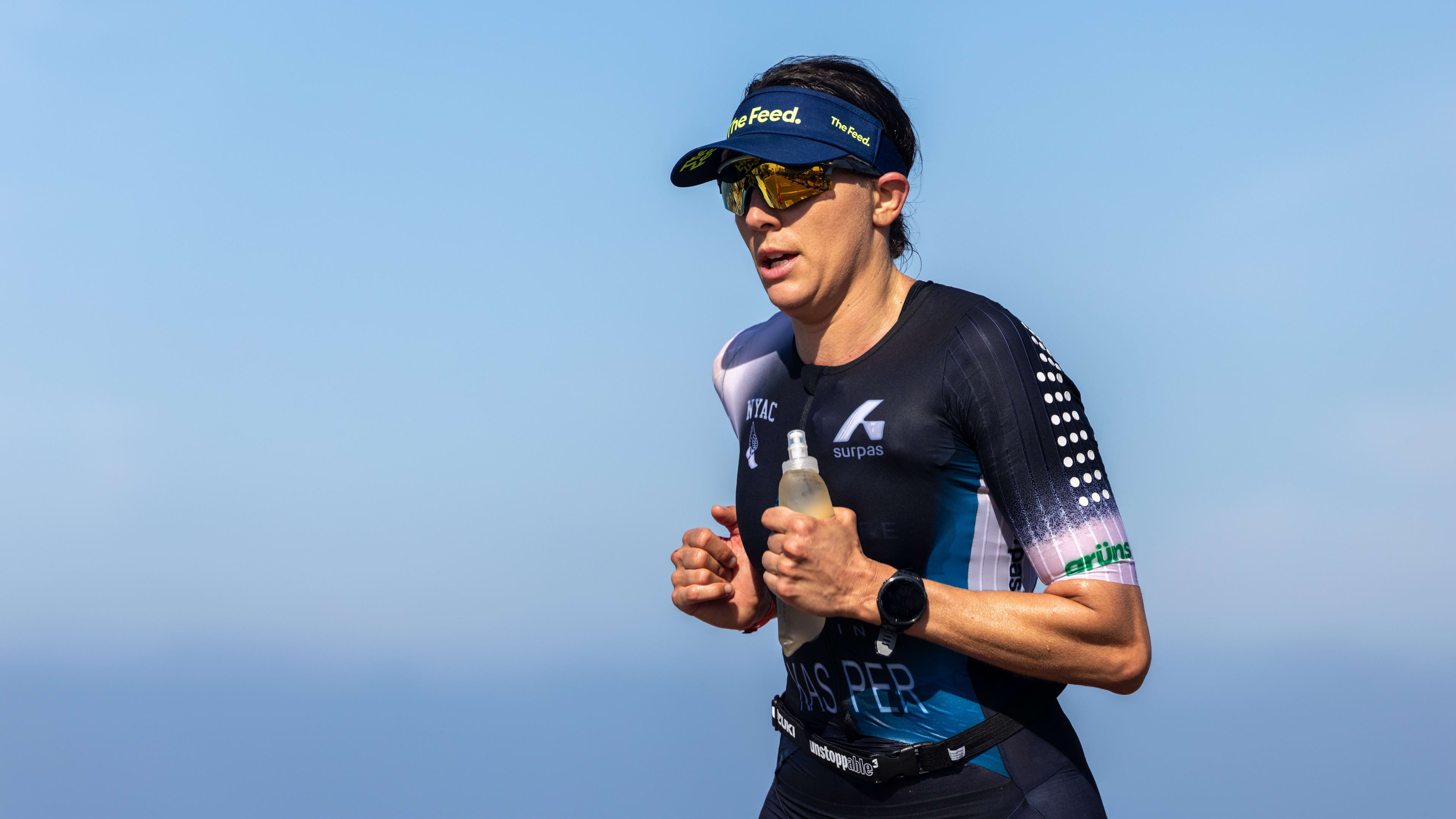
"I'm working on my bike handling skills and making progress, step by step," Knibb said after the race. She carried her advantage through the descent and into T2 with a 4:24 lead, then ran a 1:17:56 split (fifth-fastest of the day) to seal the win. She was the only athlete in the field to post a top-five split on all three legs.
It's a full-circle moment. Knibb took second at 70.3 Worlds last year in Spain, the only year she hasn't won the title since 2021. "I actually think this is my best 70.3 so far," she said. "I think it's also more special because in getting second last year, I gained a greater appreciation again for getting to win."
Knibb isn't taking a break to celebrate. She's headed to Montreal for the UCI Individual Time Trial World Championships this weekend, before turning her full attention to the IRONMAN World Championship in Kona on October 10.
How The Race Was Won
One thing that doesn't make the highlight reel is that Knibb's race-day nutrition didn't go according to plan, and she had to adjust before she even hit the water.
Breakfast, 4 a.m.: Rice and eggs, refrigerated from the night before, alongside room-temperature coffee. Not glamorous. Not lovely. But it's what she had to do, and it's a good reminder that race-morning fueling doesn't need to be exciting. It needs to be reliable, repeatable, and something your gut trusts.
Pre-race, and the first curveball: Knibb's standard move before a 70.3 is taking in a bottle carrying 80–100g of carbs during warm-up. This time, nerves and nausea had her feeling uneasy and unable to hold much down. She scaled back to a single 30g gel. It's the kind of call most athletes face at some point: when your gut says no, you don't force it. You find the best way to get some fuel in that still gets you to the start line ready, and you make up ground once you're moving and your stomach settles.
On the bike: Two bottles, roughly 240g of carbohydrate total, mixing Scratch Super High-Carb with a Mortal Hydration blend she said hadn't been raced before. That's a big number — especially for just the 2:30hr on the bike, but it's a look at how much a world-class engine can actually process. For age-group athletes, the takeaway isn't to match a pro's number. It's the strategy underneath: get carbs in early and often once your stomach allows it, and don't be afraid to front-load intake on the bike if you need to.
On the run: Two gels and a cup of Coke — a classic late-race combination that powers even World Champs to the finish. Knibb also tried to grab water on course, but aid stations were sparse ("they're a little stingy with water out there," she said), and she ended up with a cup of Precision Hydration dumped on her head after mistaking it for water. Not part of the plan, but better than nothing.
The big picture: Even a four-time world champion doesn't get a perfect day every time. What separates a good result from a blown one is the ability to adjust the second the plan goes sideways and keep making the next best decision.