Kirsten Kasper came into IRONMAN 70.3 Boise with a bad back, a missed race, and a goal of top five. She left with the win — after coming off the bike five minutes down and running through the field on the back half. She breaks down exactly how it happened.
Going into Boise, I had been focused on short-course racing and preparing for Hamburg WTCS. About 10 days before Hamburg, I aggravated my lower back and had to take a step back. I have herniated discs in my lower back, and every now and then, if I overload it in training, it flares up. I've managed it for many years, so I know what it takes to calm it down, which meant taking time off the bike and avoiding the long international travel.
I was definitely disappointed to miss Hamburg after putting together a solid month of training, but I was grateful the timing worked out and I was confident I'd be healthy enough to race Boise. My preparation wasn't perfect, but I knew I had a lot of good training in the bank, and I was excited to see how that fitness would translate over the 70.3 distance.
STEPPING UP TO MIDDLE DISTANCE
Stepping up to middle distance has been a lot of fun, and it's also been a huge learning experience. I feel like I still have so much to learn — from dialing in my fueling and figuring out where my limits are, to getting more aero and simply racing a whole new group of women. After spending the last 12 years racing short course, the change has been really refreshing. The new challenges have pushed me in training and made my preparation more dynamic, and I'm excited to keep learning and improving with each race. I also think the change in training is making me a stronger short course athlete, so it's exciting to see how this new chapter of racing and training translates over various distances.
THE SWIM
The swim was choppy, which I actually love because I think it favors strong swimmers. I went into the swim with the goal of pushing the pace and hopefully putting some time into the competition to give myself a bit of a buffer heading onto the bike. I got out well and settled onto the leader's feet in second, which was exactly where I wanted to be. Around the second buoy, I took the lead and tried to keep the pace on. Toward the end of the first lap, I moved back onto the leader's feet and decided to conserve a little energy by sitting in second for the rest of the swim.
I felt strong and in control throughout, and mentally I was already preparing for what I knew would be the hardest part of the race for me — the bike.
LETTING THE GAP OPEN
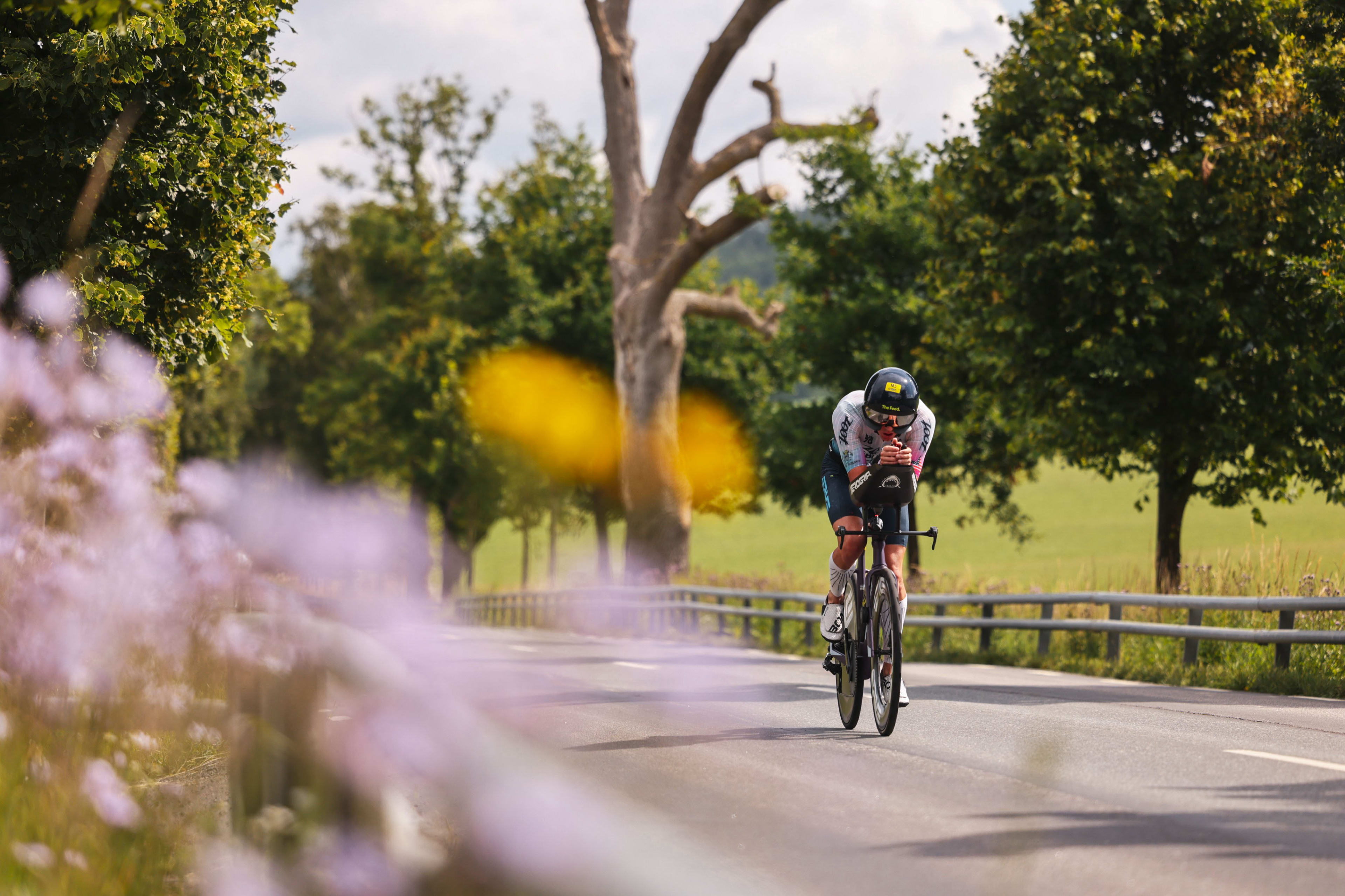
My race plan was to ride hard and race aggressively for the first 20–25 minutes, then reassess. Once I checked my power and effort level, I settled into an intensity that I knew I could sustain for the entire bike. That meant consciously letting De Vet and Berry ride away. I'd been running well in training, so I trusted that if I stayed within myself on the bike, I could make up time on the run.
THE LONG BACK HALF
I was expecting to be caught on the bike at some point and have company on the second half of the ride — that's what happened at both La Quinta 70.3 and Oceanside 70.3. Somehow I managed to stay away from the chasing women, which made it a long solo day on the bike. Coming from short course, I love the group race dynamics and I'm used to having company on the bike, so reaching the final miles by myself started to feel really long. I also usually don't ride much more than 80 km in training, so those last 10 km felt like new territory.
At that point, it was just about staying patient, sticking to my power, staying on top of my fueling, and getting myself to T2 knowing the run was where I could make a difference.
THE RUN
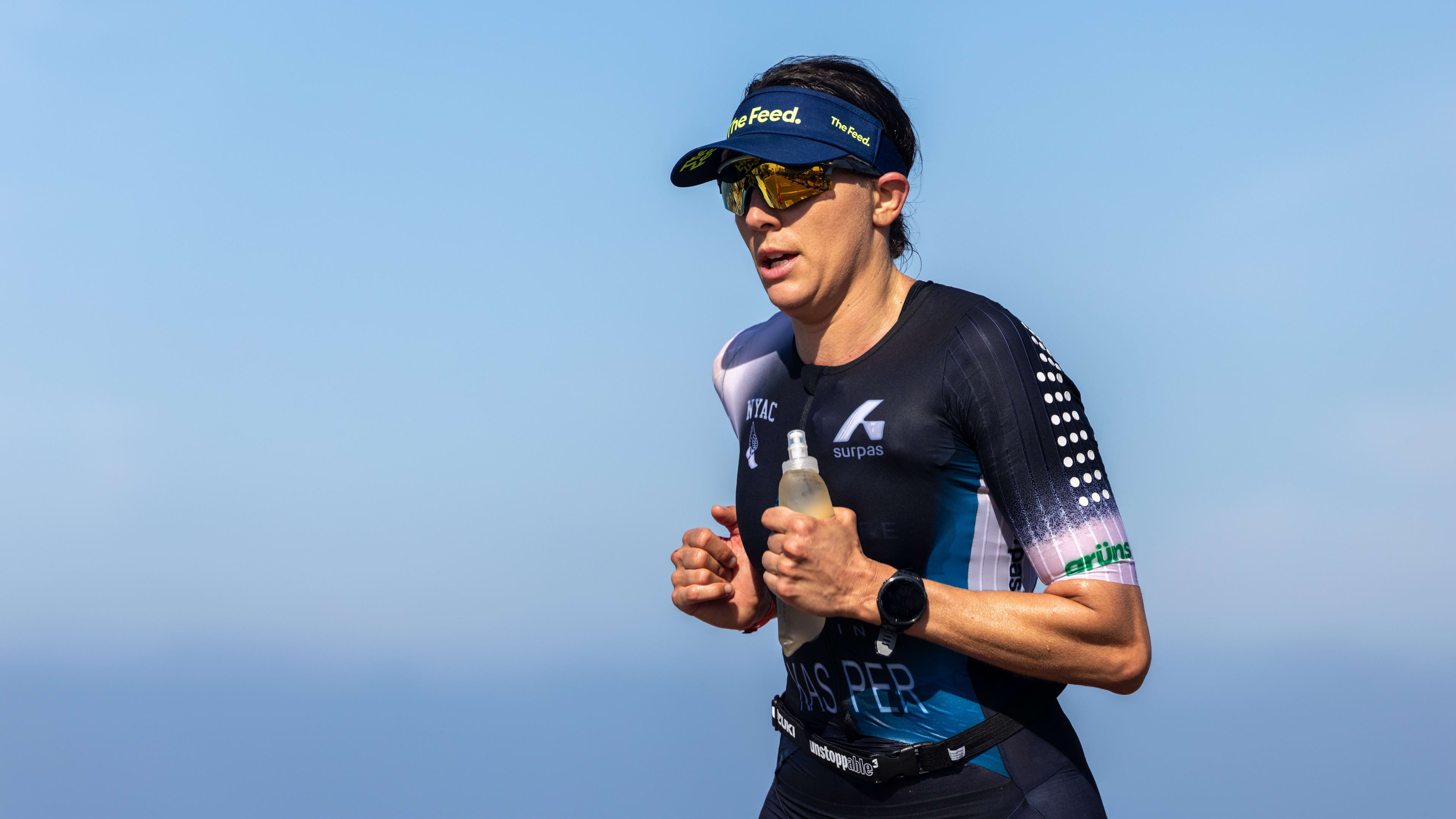
Coming off the bike I was so happy and excited to see what I had in my legs for the run. I was told in T2 I was five minutes down, which I thought was a doable amount of time to make up. I had a conservative plan for the first 10 km of the run and then planned to lift the pace if I felt good. Around 5 km I found out I was making up ground, and I was feeling good and in control, so I started to feel confident I could catch them. At that point I just kept trusting my pacing, kept fueling and taking on fluids at each aid station and focused on closing gradually.
I caught the leaders around mile 9. I was stoked. I felt really good running, so I lifted the pace as I passed and then felt like I was running for my life. I wasn't confident they wouldn't come back on me, so I just kept the pressure on all the way to the line. I don't think I truly believed I had the win until I turned into the finishing chute.
SHORT-COURSE SPEED AS A WEAPON
I wasn't expecting to win. I was confident I could be in contention for the podium, but winning definitely surprised me. I think I biked better than I expected, especially considering my lead-up to the race and the time I had to take off the bike because of my back flare-up. I do think my short course speed can be used as a weapon on the run.
Going into the race, I told myself I'd be happy with a top five finish because that meant finishing at or better than my start number. To come away with the win was incredible and really rewarding. I know I still have so much to learn at the longer distance and there are still plenty of areas I can improve, so a win at this level means a lot and motivates me to keep getting better.
FUELING PLAN
My coach and I talked a lot about how important fueling would be, especially with the warm and windy conditions. We knew hydration was going to be just as important as getting enough carbohydrates in, so I really prioritized staying on top of both. I also made sure to take advantage of the aid stations for extra water since I couldn't carry everything I needed.
Pre-race:
Nomio shot 3 hours before start
1 × Maurten Caf Gel about 15 minutes before the swim start
Bike:
2 × 750mL bottles of Skratch Hydration
2 × 500mL bottles of water
Additional water from aid stations
Run:
250mL flask with Skratch Hydration
2 × Maurten Caf Gels and 1 × 40g SIS Gel
Water from every aid station
Post-race:
Amacx cherry juice for recovery
WHAT THE WIN MEANS
This win means more to me personally than it does for my Pro Series standings. Going into Boise, my focus wasn't really on the standings because I won't be racing a full Ironman this season. I chose to race the Pro Series 70.3 events because I wanted to line up against the best middle-distance athletes in the world and challenge myself. This win gives me a lot of confidence that I'm moving in the right direction. The rest of my season will include a mix of short-course racing while continuing to prepare for the 70.3 World Championships in Nice.