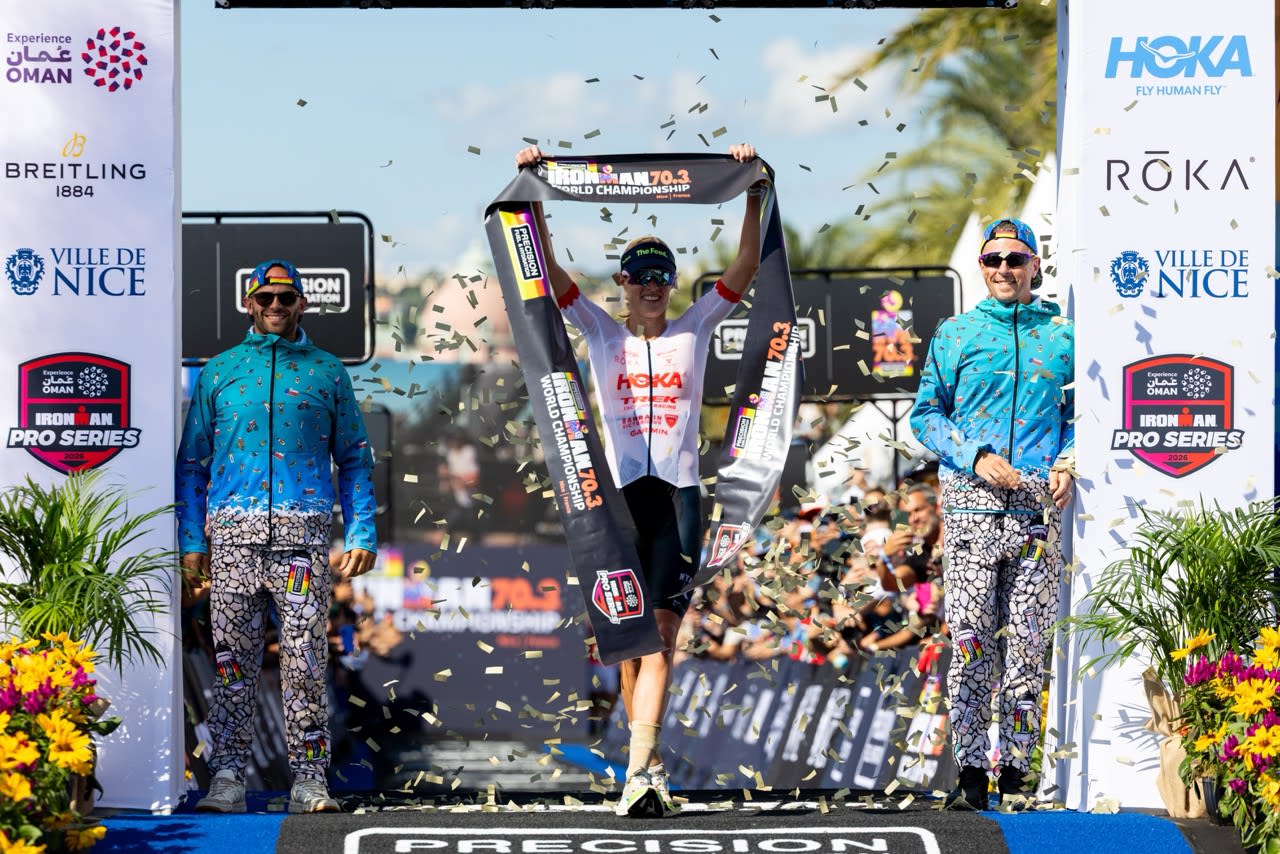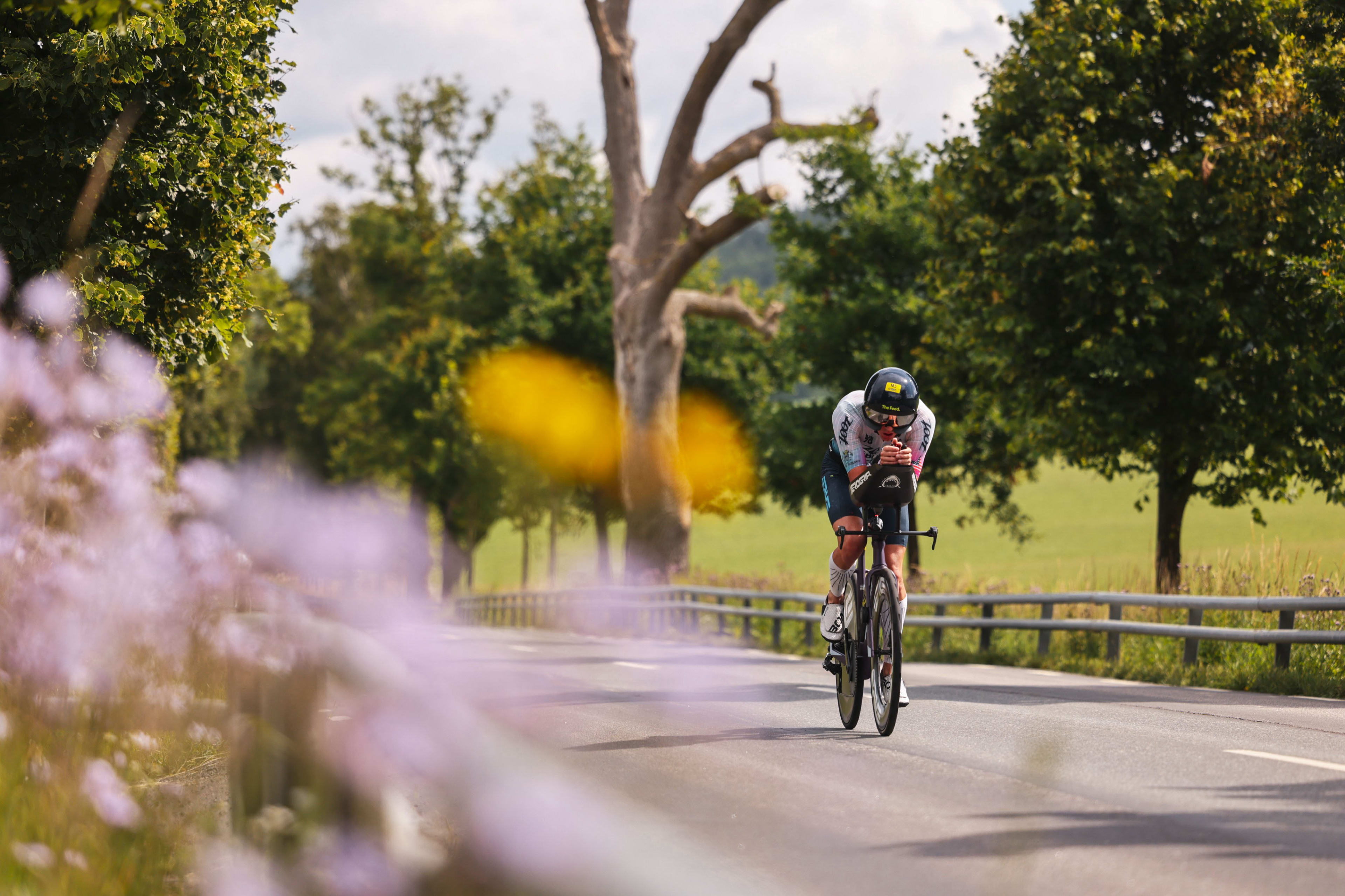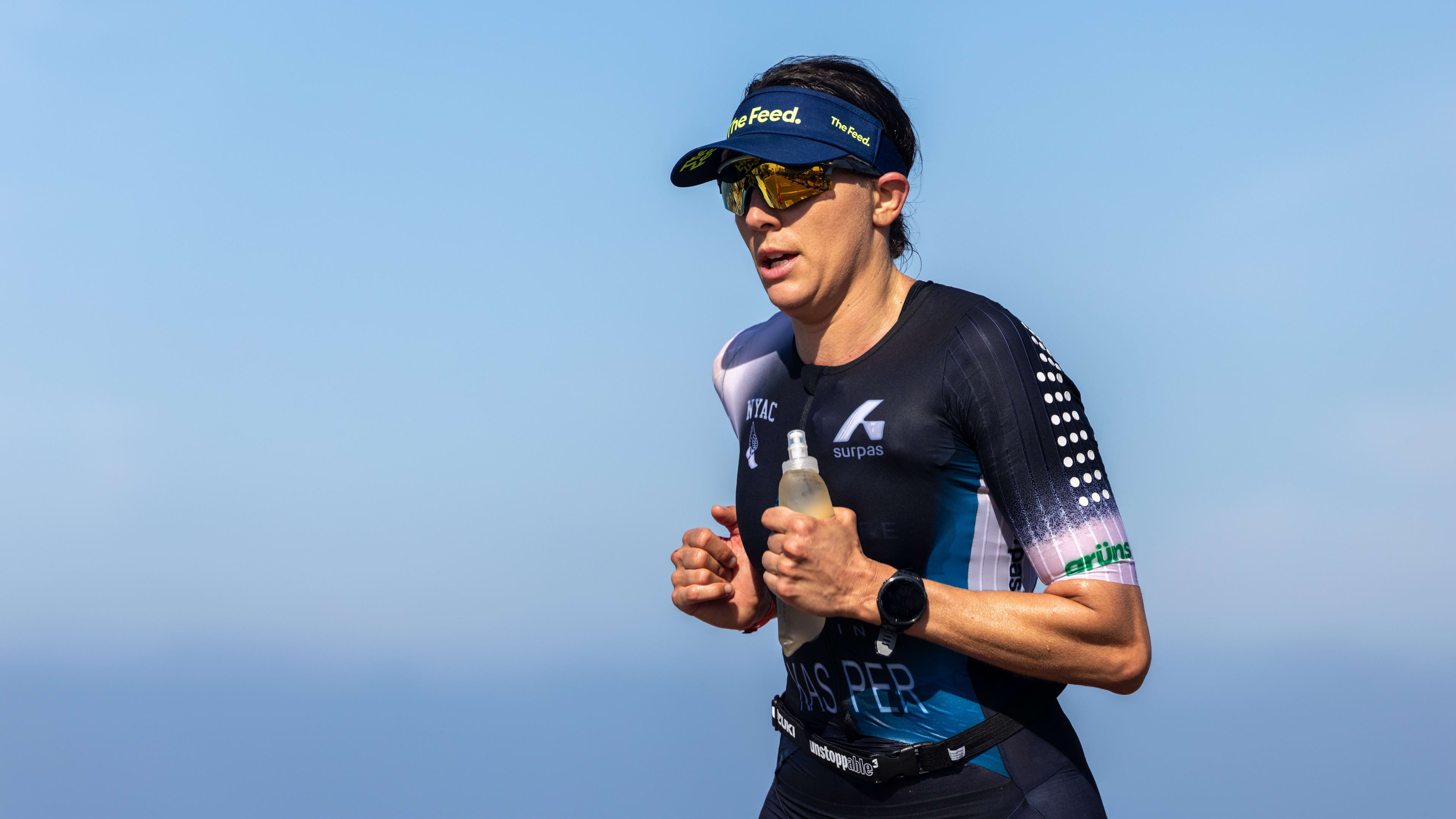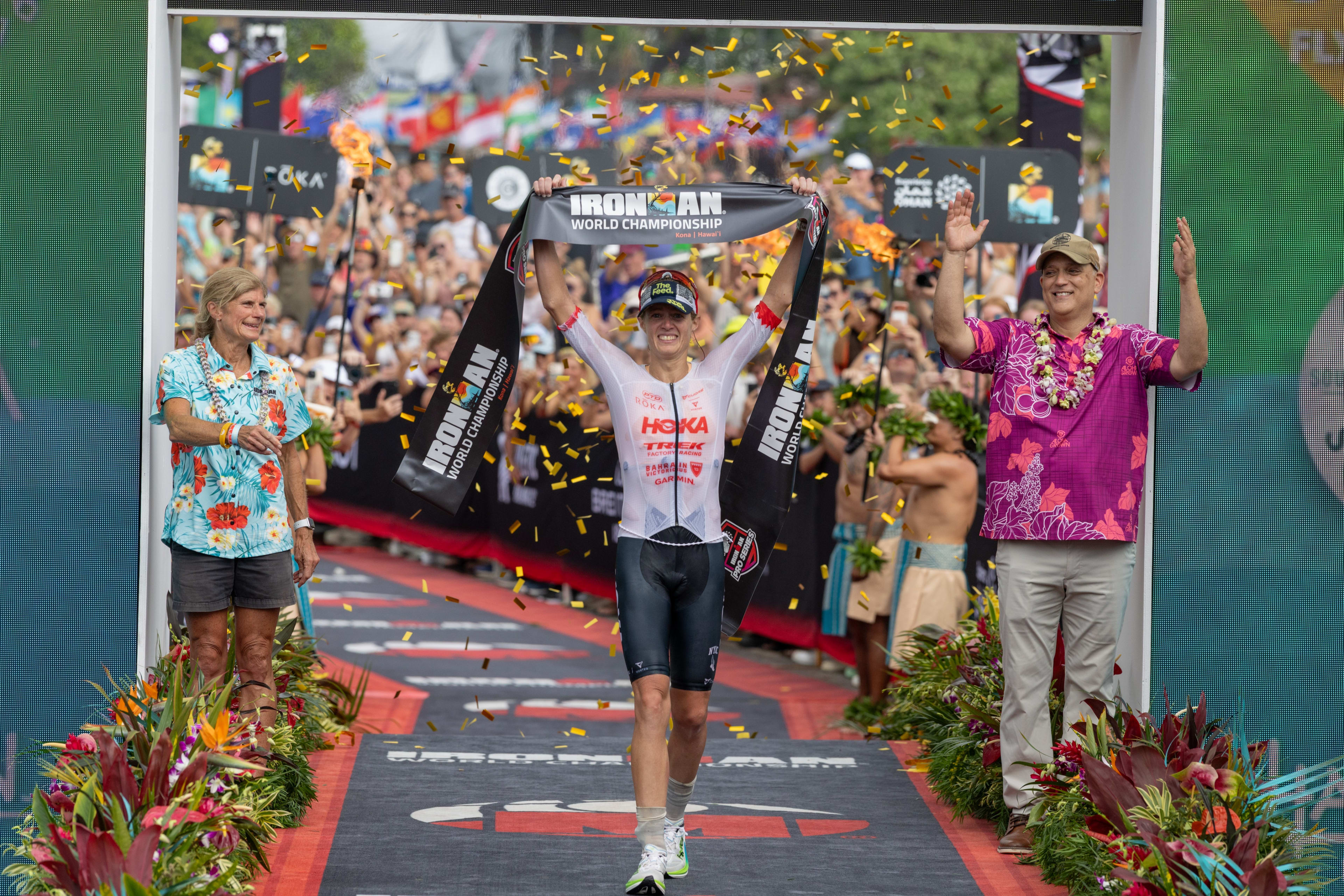
The 2026 Kona World Championship was full of drama, surprise, and redemption. Not only did Taylor Knibb win on the heels of three world championship events in 28 days, but she also became one of five in history to do the 70.3 and full-distance double in the same year.
Taylor Knibb finished the 2026 IRONMAN World Championship in 8:36:29, her first full-distance title, and she got there after racing three world championship events in 28 days. She won the IRONMAN 70.3 World Championship in Nice, raced the UCI World Time Trial Championships in Montreal eight days later, and started in Kona 20 days after that. Her Kona win also made her one of five athletes in triathlon history to take both the IRONMAN 70.3 World Championship and the IRONMAN World Championship in the same calendar year.
How the race played out
Knibb came off the bike in front and started the marathon with a lead that the defending champion, Solveig Løvseth, spent the second half of the run cutting down. Løvseth passed her around mile 21 while Knibb. All too familiar with the repercussions of pushing too hard in the Kona, Knibb stayed composed and trusted her pace. She knew what she was doing. The lead changed hands again in the final kilometer when Løvseth started to unravel, and Knibb went by to win on Aliʻi Drive. Knibb ran the marathon in under three hours, a personal best, during the hottest part of the day on the Queen K.
Heat Managment Across the field
With 23 kilometers left on the run course, Knibb picked up an Insulated Feed Race Day Bottle that she said still had ice inside. The cold fluid and the cooling it gave her arrived at the point where several of the field favorites were dropping off the pace.
The bottle was just one piece of a cooling routine she ran for the whole marathon. She wore an Omius visor, doused herself with water, and packed ice at every aid station without slowing down.
Cam Wurf finished 12th with a 50:44 swim, a 4:16:48 bike and a 2:51:41 marathon. He kept his core temperature down with relentless dousing and ice packing at every aid station, the same routine Knibb used.
Magnus Ditlev led the men’s race for most of the day. He came out of the water 2:02 down in 30th place and made his biggest gains on the climb to Hawi. He took the lead near mile 85 when Matthew Marquardt went into the penalty tent for drafting, and he entered T2 first with a 1:27 lead after a 4:06:47 bike.
He was still about four minutes ahead past the halfway point of the marathon when the heat started taking its toll on the hot road. He reached for an ice cap cooling system on the run. The heat caught up with him anyway. He stopped for ice around mile 19, slowed to a walk, and Vincent Luis passed him at an aid station with under five miles to go. Ditlev was forced out of the race.
Several other pros and top age-groupers ran with cooling gloves or carried ice packs in their hands, since the palms give up heat quickly.
The Feed Ice Bandana on Aliʻi Drive
On race day, the Feed Ice Bandana was the most visible product on the island.
Age-group athletes wore it, and so did support crews, volunteers, families, and local spectators along Aliʻi Drive. One hour of finish-line broadcast footage showed an age-grouper crossing in a Feed Ice Bandana about every 7.5 minutes, and that group included sub-9-hour finishers such as Luke Evans, who finished in 8:58:13.
What The Champ Fueled With
Knibb sent us her order for the week, and it covered fueling, hydration, recovery, sun protection and the bottles she raced with.
She didn't skimp on the hydration and cooling front — when heat is one of the biggest factors standing between a winning pace and a walk to the finish line, you have to come prepared.