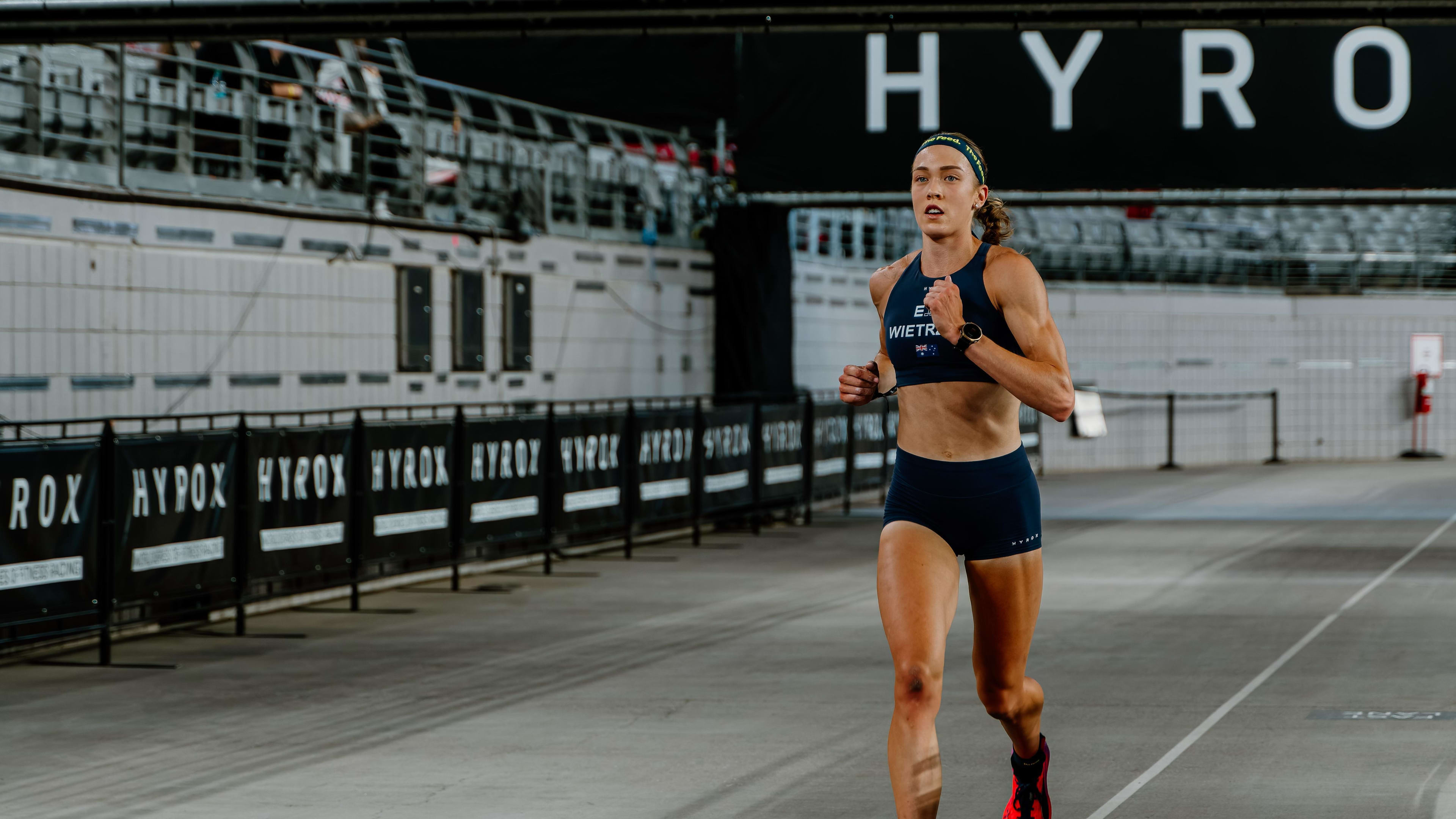
CrossFit and HYROX both demand a lot from your body — but not in the same way. We sat down with five-time CrossFit Games champion and HYROX athlete Tia-Clair Toomey to break down exactly how fueling changes between the two.
What are the biggest differences in physical demands between CrossFit and HYROX?
The biggest differences in physical demands between CrossFit and HYROX come down to duration, energy systems, movement complexity, and what your body is being stressed to do repeatedly.
HYROX is more like a hybrid endurance race with strength elements. It’s long, continuous, and predictable, placing a heavy demand on the aerobic system, muscular endurance, and pacing strategy.
CrossFit is broader and more varied. It places higher demands on power, skill, and maximal strength, often across shorter, high-intensity efforts. It also requires greater adaptability due to constantly changing movements and formats.
How does your fueling change between competing at a CrossFit or HYROX competition?
HYROX events are long and continuous (typically ~60–90 minutes), relying heavily on the aerobic system and sustained glycogen use.
CROSSFIT competitions consist of shorter, high-intensity efforts, often across multiple events. These rely more on anaerobic energy systems and stored glycogen, with breaks between efforts allowing partial recovery.
Are carbohydrate needs different between the two? Why?
Yes, carbohydrate needs differ between the two.
HYROX has a much higher acute carbohydrate demand during the race because you are working continuously for long enough to actively deplete glycogen stores. High carbohydrate intake before and during the race is important to maintain performance and prevent energy dips late in the event. I lean on Maurten's Gel 100 and CAF 100 Gel 100.
CrossFit still requires a high overall carbohydrate intake to keep glycogen stores full, but you typically don’t need large amounts immediately before or during each event. Because workouts are shorter and separated by rest, glycogen depletion during a single effort is less extreme. For CrossFit, glycogen saturation leading into competition day is more important than intra-event fueling.
What does an ideal pre-workout or pre-race meal look like for each?
For both HYROX and CrossFit, a high-carbohydrate meal around 2–3 hours before competition is ideal to allow for digestion and optimal energy availability.
For HYROX, easily digestible carbohydrates are key. Liquid carbs or gels can be especially useful closer to race time to top up energy without causing gastrointestinal discomfort.
For CrossFit, the focus is still on carbohydrates, but there is also an emphasis on supporting energy, focus, and power output. This can include a balanced pre-event approach with carbohydrates, hydration, and supplements that support performance (e.g., caffeine, electrolytes, creatine, or beta-alanine), depending on the athlete’s tolerance and experience.
Overall, HYROX requires a heavier carbohydrate emphasis due to duration, while CrossFit balances carbohydrates with performance-focused support.
Is intra-workout fueling necessary for CrossFit, and how does that compare to HYROX?
Intra-workout fueling is generally not necessary for most CrossFit events. Because workouts are short, the body relies primarily on stored glycogen, and there’s limited benefit to consuming carbohydrates during the effort itself. Hydration and electrolytes may still be useful, especially across a long competition day. I always use LMNT to get in adequate and balanced electrolytes.
In HYROX, intra-race fueling is much more important. Since the event is long and continuous, consuming carbohydrates during the race (e.g., gels or carb drinks) helps maintain blood glucose levels, delay fatigue, and sustain performance in the later stages.
How do recovery and post-workout nutrition differ?
Recovery nutrition differs mainly due to total workload and structure.
In CrossFit competitions, recovery is more immediate and repeated. Athletes need to refuel quickly between events with easily digestible carbohydrates, some protein, and fluids to restore glycogen and support muscle repair before the next workout. This is where recovery shakes can come in handy.
In HYROX, recovery is more about post-race replenishment. After a long, continuous effort, there is a greater need to restore depleted glycogen stores, rehydrate, and support muscle recovery. This typically involves a larger overall intake of carbohydrates, protein, and electrolytes after the event rather than rapid refueling between bouts.
What are the most common fueling mistakes athletes make when switching?
One of the most common mistakes is underestimating the importance of properly fueling the body with the right balance of nutrition, hydration, and supplementation.
Athletes transitioning from CrossFit into HYROX often fail to fuel adequately during the race, which can lead to energy crashes later in the event.
On the flip side, those moving into CrossFit may over-prioritize intra-workout fueling, which is usually unnecessary, while neglecting total daily carbohydrate intake in the lead-up to competition or throughout long training days.
Other common mistakes include poor hydration strategies, trying new foods or supplements on competition day, and failing to understand how important fueling the body is for performance.
What’s one key piece of advice for someone preparing for their first HYROX or CrossFit experience?
Practice your fueling strategy in training exactly as you would on competition day.
Whether it’s timing your pre-race meal, testing intra-race carbohydrates for HYROX, or dialing in between-event recovery for CrossFit, nothing should be new on the day. A well-practiced fueling plan can be just as important as your physical preparation for performance. Also, making use of the information that The Feed consistently provides helps consumers better understand and stay educated on how different supplements can support performance.