Two threshold sessions, one day, and the fueling strategy that makes it work. Here's how pro cyclist Michaela Thompson does her hardest training days.
If you've spent any time in endurance training circles lately, you've probably heard the term "double threshold." It sounds intense. It is. But it's also one of the most effective protocols for pushing your threshold power when you've plateaued on traditional training.
We sat down with Michaela Thompson, a pro cyclist with HPT Racing, to break down exactly how she uses double threshold days, when they make sense, and what she fuels with to get through them.
What Is Double Threshold Training?
Two FTP sessions in a single day—FTP being the highest effort you can hold steadily for about an hour without fading—each lasting around 90 minutes.
The idea is simple: one long threshold session eventually breaks down your form and drains your power. Split it into two, and you keep the quality high from start to finish.
The time between sessions isn’t just recovery—it’s part of the protocol. Your nervous system resets, your legs come back online, and you’re ready to go again
Michaela's Structure:
Morning session: 10 x 3-minute intervals at 105-110% FTP with 1-minute empty pedaling recovery between each. Short, sharp efforts above threshold.
Afternoon session (7+ hours later): 5 x 6-minute intervals at 100-105% FTP with 1-minute recovery. Longer efforts right at the threshold, on legs that already worked hard that morning.
Both sessions are designed to stay within a very specific stimulus range — not too far above or below threshold — so you get exactly the adaptation you're after without creating unnecessary fatigue on top of it.
The key is that minute of recovery between intervals. As Michaela puts it: "Your body's learning how to recover as quickly as it can within that minute, then do it again and again and again."
She runs this protocol once a week, typically in the 4-to 6-week period leading up to a major race. It's not an everyday thing. It's a precision tool.
Who Is It For?
Not a beginner protocol — you need a solid aerobic base before adding this kind of intensity. But Michaela is clear it's not just for pros: "I think people could definitely benefit from it if they have the time in their day to basically focus around it."
That's the real constraint. You need 7+ hours between sessions, which means structuring your whole day around it. "I like having those days where it's like, this is what you're doing. They're both short workouts, so you just go."
How She Fuels It: 80g Of Carbs Per Session
The fueling protocol matters as much as the intervals. Because both sessions demand maximum quality from the same energy system, glucose availability is everything. Michaela targets 80g of carbs per session, and she keeps it simple.
Her setup for each session:
In the bottle: First Endurance EFS PRO Drink Mix, which gives her 30g of carbs as a baseline throughout the ride.
Two Maurten Gel 100s per session: she takes the first before her 5-minute opener to top off glycogen, then the second during the 10-minute recovery window before the interval sets begin. That's 25g per gel, 50g total from the gels, plus 30g from the drink mix. 80g on the nose.
Why Maurten? In her words: "It just goes down so easily.” No gut issues, no aftertaste, no thinking about it. When you're about to do 10 threshold intervals, the last thing you want is to be managing your stomach.
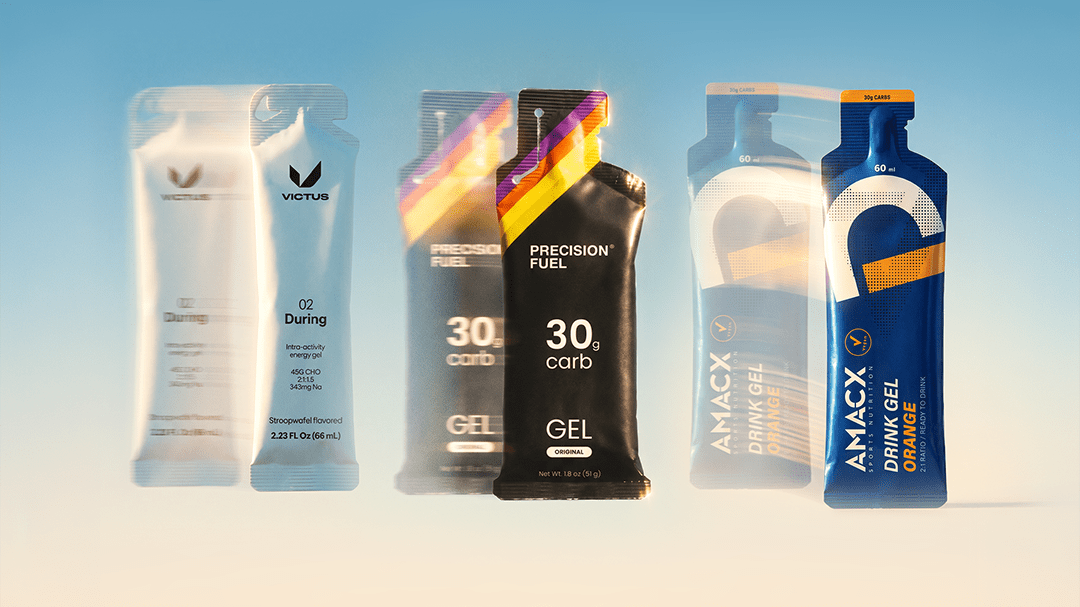
On days when she wants a caffeine boost, she swaps one of her Maurten 100s for an Amacx Drink Gel in Cola. Same carb range, but the caffeine adds an edge for the afternoon session when fatigue from the morning ride is still lingering.
She also counts the Maurten Gel 160 as one of her go-to products for longer rides and race days where she needs more carbs per gel. At 40g per serving, it's one of the most calorie-dense gels on the market.
Between Sessions: The Recovery Window
With 7+ hours between rides, what Michaela does off the bike matters just as much. Eat within 30 minutes of finishing the morning session. Then keep fueling — she fits in two or three more snacks before the afternoon ride. Simple, digestible stuff: a banana with peanut butter, some dates, easy carbs. Not a bowl of vegetables. Not a heavy meal that sits in your stomach.
Her early mistake: not fueling enough between sessions. "Don't let yourself bonk on that first workout," she says, "because it's just going to set you up for a hard second one."
The Takeaway
Double threshold training is not a hack. It's a structured, demanding protocol that works when applied at the right time in your training cycle — after your base is built, in the weeks before a big race. The stimulus is real. The recovery demands are real. And the fueling has to match.
If you're considering adding a double day, start with the fueling dialed in before you worry about the watts. You can't adapt to a session you couldn't finish.