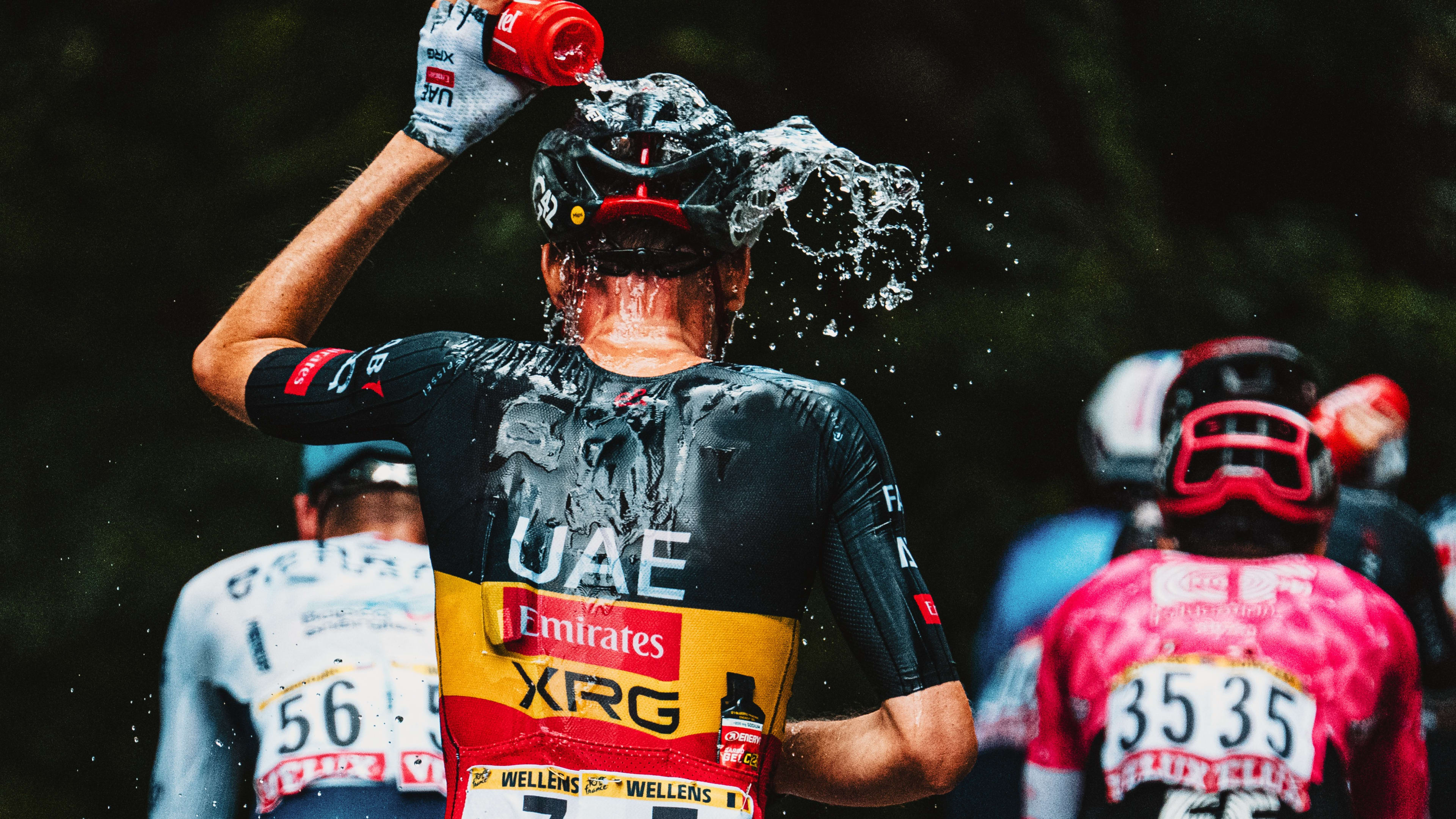
The Tour is three weeks, 21 stages, and more drama than most sports produce in a decade. Here's everything you need to know to actually follow along.
The TDF takes athletes across France for three straight weeks. There's a lot to unpack.
If you've been watching and have no idea what's actually going on — the jerseys, the strategy, the carb numbers that seem impossible — this one's for you.
Here's your cheat sheet to the greatest race on earth.
What actually is the TDF?
The Tour is a 21-stage professional cycling race held every July across France. It covers roughly 3,300+ kilometers over 21 stages, typically including flat sprint stages, brutal mountain stages through the Pyrenees and Alps, and time trials where riders race solo against the clock. It's been running since 1903. Three weeks, 180+ riders, one country, and enough drama to fill a Netflix series. (There's actually a great one — Unchained on Netflix. Start there.)
Think of each day as its own race — called a stage. The rider who completes all 21 stages in the lowest total cumulative time wins the whole thing.
The Jerseys — here's what they mean
This is where most newcomers get lost. You'll see riders wearing four different colored jerseys throughout the race. Each one means something different.
🟡 The Yellow Jersey (Maillot Jaune)
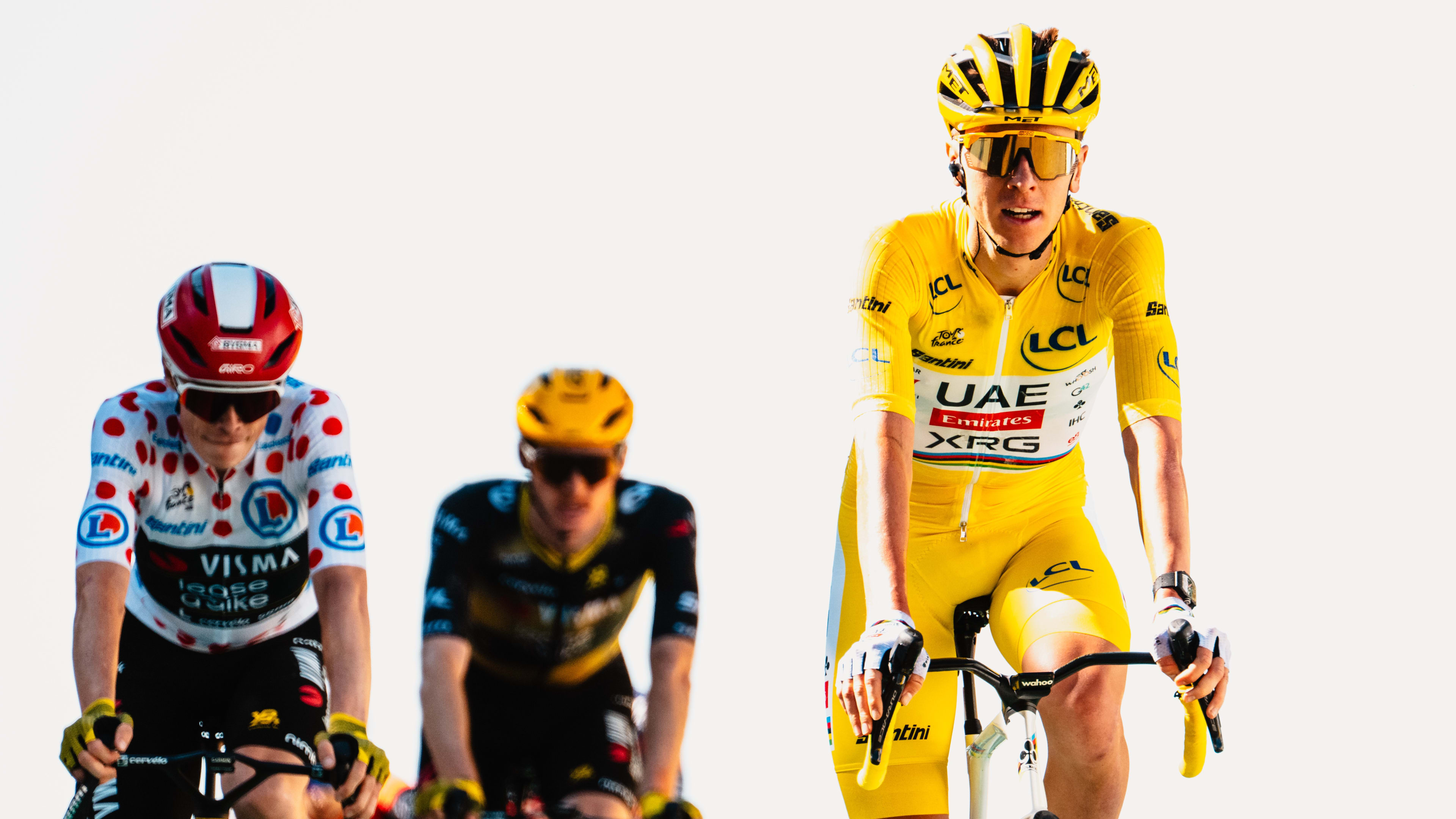
The big one. The maillot jaune is awarded to the rider with the lowest cumulative time across all stages — it's the main prize of the Tour and represents the overall race leader. Its color is a nod to L'Auto, the newspaper that founded the race in 1903 — because the publication was printed on yellow paper, the same color was chosen for the jersey worn by the overall leader. Whoever wears yellow on the final stage in Paris wins the Tour outright.
🟢 The Green Jersey (Maillot Vert)
The green jersey is worn by the leader of the points classification — riders are rewarded points for top-15 finishes in each stage, with more points available on flat sprint stages than hilly or mountain ones. This is typically the sprinters' competition, aka the fastest finishers on flat days. In 2025, Jonathan Milan held off Wout van Aert in a dramatic bunch sprint to secure his maiden Tour stage win — a breakthrough that helped pave the way to his Green Jersey triumph.
🔴 The Polka Dot Jersey (Maillot à Pois)
The polka dot jersey is awarded to the leader of the mountains classification — it rewards the strongest climbers who consistently perform well on categorized climbs. Harder climbs offer more points, and on summit finishes, points are doubled for the final climb. The winner earns the title "King of the Mountains." Tadej Pogačar claimed the Polka Dot Jersey (in addition to the yellow jersey) in 2025, showcasing the climbing prowess that has made him one of, if not the, defining riders of modern cycling.
⚪ The White Jersey
The white jersey is awarded to the highest-placed rider in the general classification aged 25 or under — it follows the same time-based rules as the yellow jersey but is restricted to young riders only, highlighting the next generation of GC talent. In 2025, Florian Lipowitz claimed the White Jersey after a sensational Tour debut — the German not only topped the young rider classification but also finished third overall in Paris.
What to watch for in 2026
This year's race starts somewhere new. The Tour heads back on the road for the 2026 Grand Départ, with Spain welcoming the race for the third time in its history and the region of Catalonia getting its first taste of Tour action. Barcelona will host the opening stage's team time trial, with riders navigating past landmarks including the Sagrada Família.
The GC battle figures to be just as intense. Pogačar is Pogačar. But the field keeps getting younger and faster, and Vingegaard isn't going anywhere.
And the fueling? It'll keep evolving too. The carb numbers riders are hitting today would have seemed impossible a decade ago. What's standard on the peloton now is only just starting to trickle down to the rest of us — and that's exactly why we pay attention.
That's the thing about the Tour. It's the world's biggest lab for endurance performance. Every July, the fastest athletes on earth stress-test nutrition, recovery, and technology at a level no one else can match. We watch so you don't have to guess.