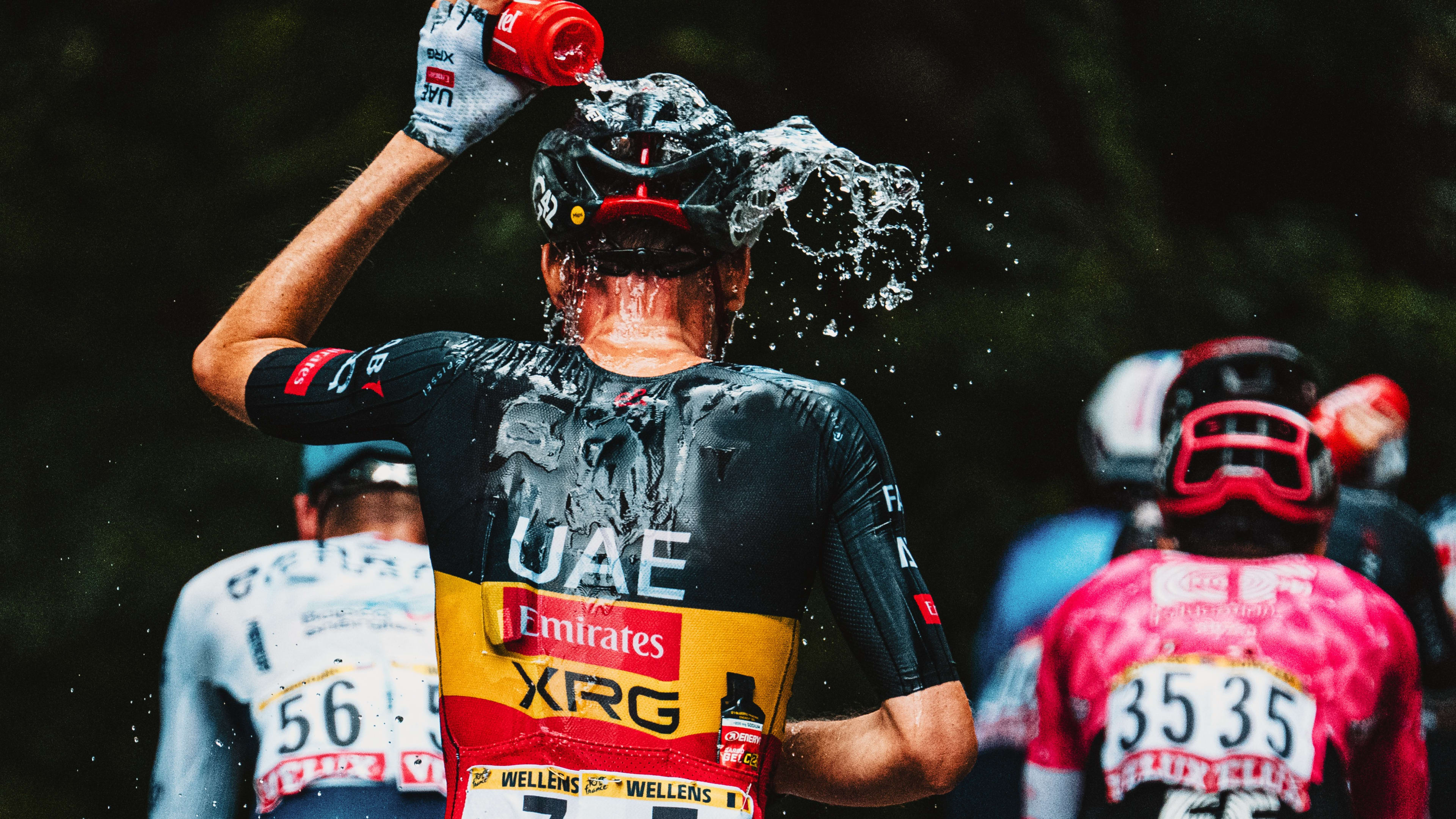
Three FKT attempts. Seven days. Rob set out to chase three UK routes back to back — and got exactly the season he'd been having all along: demanding, honest, and definitely not to plan.
How It Started
Every year I try to come up with some kind of challenge — something that isn't a race, but still gives me a reason to chase a clock and build a short film around it. This one actually started over Christmas, of all things, watching Harry Potter for the first time (yes, I know, late to the party). Watching the landscape shots of Scotland got me thinking about how stunning the UK really is. I'd already been mulling over King Alfred's Way for a while, so I did some digging and landed on three routes: King Alfred's Way, the Pennine Bridleway, and the Badger Divide up in Scotland.
I'll admit my sense of what counts as a "reasonable" week is a bit skewed. I've done enough 800–1000 km single efforts that stacking three separate FKT attempts into seven days, mostly during daylight hours, seemed… fine. It had to be a challenge, right?
Where My Head Was At
Going in, I actually felt good. I'd taken a full week off the bike after a disappointing Unbound campaign, and the three weeks of training leading into the UK were some of the best I'd had all year. So confidence-wise, I was in a solid spot — but this year as a whole has been a different story.
I'm aware my time in this sport is more hourglass than open-ended at this point — more sand in the bottom than the top — so I've been trying to cram in as many bucket-list efforts as I can. The problem is that plan only works if everything goes close to perfect, and this year has been anything but. The schedule left no room to breathe, so every time I got knocked back a step, it snowballed: a missed block of training here, a setback there, and it turned into one of the most challenging and honestly disappointing stretches of my career.
Which made it feel even better to walk into this UK week fit, rested, and confident.
Prepping to Ride Blind
I don't have the time or budget to fly out and pre-ride routes like this, so my prep is mostly mental: studying other riders' Strava times, poring over elevation profiles, and building a realistic sense of pace for the duration. It's not far off from time trial prep, something I've got a lot of road racing experience with — the big difference is that instead of steeling your mind for a few minutes, you're doing it for 10, 15, 20 hours straight. That's exhausting in a completely different way, but experience helps you manage it.
The real key is staying relaxed heading in. Once you hit the start button, the blinders go on and it's just execution — fuelling, navigation, minimal stops, and hitting the time checks you set for yourself beforehand.
King Alfred's Way: Undone by a Rock
This was the one I wanted most.
Coming into the final 70 km, I was ahead of the previous fastest time — which was already quick — and I knew I'd need a real margin to beat it comfortably. Things were looking good. My fuelling had been solid, and I was riding into the one section of the route I'd actually pre-ridden a few days earlier, feeling confident.
Then I hit a rock I never saw and took a massive pinch flat in my rear tire. I knew from how fast it went down that I had a problem. The first plug just slid straight back out of the hole. I got the tire holding again, but the puncture was so big it kept pushing plugs out, and I had to stop three or four more times before finally sealing it with one large plug. By then I knew the record was gone. That was somewhere around 30–40 km to go, and from there I just limped it home.
Physically, I was shattered — I rode full gas for 13 hours and paid for it. But the mental side hit harder. It felt like one more entry on a season-long list of disappointments. I had to somehow reset, rebuild the bike (new tires, suspension fork, chainring, pulling the aero bars), and drive three hours north the next day for the Pennine. Weirdly, I started that next effort in a good headspace — the weather was great and I felt strong.
The Pennine Bridleway: Death by a Thousand Gates
I'd read there would be a lot of gates on this route. In my head, "a lot" meant maybe a hundred. I lost count after the first hundred, and that was early. They came in tight succession from around 150 km onward, and that's when things really started to unravel. My average speed dropped from 22 km/h, to 20, to eventually around 18 — every gate meant stopping, dismounting, unlatching, walking the bike through, setting it down, relatching, remounting, and going again. Incredibly frustrating.
Then the weather turned on me. I'd been prepared for tough conditions before, but somehow I wasn't ready for a swing from 25°C and sunny to 8°C, gale-force wind, and rain — all while I was stuck up on the exposed highlands of the route with nothing but a skinsuit and an ultralight rain shell. Not nearly enough.
As it got dark, I was shivering and only getting colder. My only shelter was some three-foot stone walls, and at one point a shack I had to clear sheep out of just to reassess. My phone was down to about 5%. I looked at the map, picked a direction with a paved road in a valley, and decided I'd knock on the first door I found, dry off, charge my phone, and call Matt (who was filming support) to come get me.
Walking out of that sheep shack, I remember saying out loud, "please god let him be at the bottom of this descent." I came around a bend and saw taillights in the distance — it was him. I got to the van, stripped everything off, put on my down jacket and rain gear, and sat with the heat on full blast for about 30 minutes before I stopped shivering.
I was disappointed to quit, but there wasn't really another choice, and I don't regret it. I'd happily give King Alfred's Way another shot someday. The Pennine, though — the gate-to-fun ratio just isn't worth it to me. I won't be back.
The Badger Divide: One for the Column
It took a few days to shake off two straight disappointments. This year has kept on giving in that department, so clearing my head and getting up for a third effort wasn't easy.
Eventually I landed on a mindset shift: I stopped caring about the outcome in any negative sense — not "just pedal around" energy, but a genuine "it will be what it will be." I'd ride my pace, and whatever that added up to at the end would be fine.
My biggest worry was the weather — classic Scotland. It rained almost every day we were there and the sun never really came out. I got lucky with a dry first four or five hours, and even without sun, the scenery was incredible. Once the rain started, it didn't stop and only got heavier — but this time, I was actually dressed for it.
I was ahead of my splits the whole way through. I remembered looking at the previous record-holder's data and thinking he must have really blown up in the last 60 km, because his pace dropped off hard there. I found out why myself: the final climbs were brutally steep — steep enough that I had to walk sections, which gave me flashbacks to the Pennine's gates (there were, of course, more gates too). The route wrapped up with a roughly 20-minute descent that was basically a two-inch-deep running trough of water, soaking and freezing me the rest of the way into Inverness.
In the end, I finished about an hour faster than the previous record. It was a massive relief — one for the win column after a streak of disappointments. This was also the last ride before a big planned break, so I wanted to leave everything out there, good and bad, so that when I finished, I was actually finished — the exhaustion, the highs, the lows, all of it washed away into pure satisfaction. Satisfied that I'd had a good ride, and satisfied to be done.
Nutrition: Adapting on the Fly
I train a lot on gels, like most people do — it's the most efficient way to fuel a high-intensity effort, especially something like King Alfred's Way. But it's brutal to run on liquid sugar for three 14-hour days back to back. After KAW, I shifted to roughly a 60:40 mix of solids (bars, chews) to gels, which kept my stomach and energy levels much happier through the other two efforts.
I'd planned for this ahead of time and brought way more fuelling options than I'd need, specifically so that on days when I was cracking and didn't want to eat anything, I'd still have something palatable on hand. On the longest days, eating becomes an absolute chore — having options is what keeps gas in the tank.
Gear: The One Regret
I'm genuinely happy with how the bike side of things went — maybe a slightly smaller chainring for the final two efforts, but that's a nitpick. The real mistake was not digging deep enough into the Pennine weather forecast. I should have packed a heavier rain jacket, leg warmers, and a hat. A full heavy coat would have been tough to justify bringing, but something as simple as an emergency blanket — which I almost always carry and takes up basically no space — could have solved a lot of that. That's a mistake I won't make again.
Sitting at Heathrow
There's always a lot to unpack after a week like this. I've had a huge amount of success in ultra-distance efforts over the years, so maybe I hadn't fully appreciated what it feels like when things don't go my way. Looking back at the UK trilogy as a whole, it's a mixed bag — I'm proud I put out three solid efforts across seven days, but the disappointment of missing the first two goals is real.
Rides like this are exhausting, and they're also a choice. I'm fortunate to get to do something this ridiculous and call it my job, and when it doesn't go to plan — that's life. I've had enough good days that my bar for "successful outing" is a high one. Adversity is part of this sport, and honestly it's the part that shows you what you're made of — how you adapt when things go sideways. A lot went sideways that week, and I think how I handled it in the moment is what actually mattered in the end.
Like Rocky said: it ain't about how hard you hit, it's about how hard you can get hit and keep moving forward.
What's Next
Rest. I've crossed the Atlantic five times since January, plus trips to California, Kansas, and Alberta. Part of the reason I stepped away from road racing was to spend more time at home, and home is exactly the place I haven't spent much time this year. So for now, the plan is simple: rest, recover physically, and probably more importantly, mentally, from the last six months. Sleeping in my own bed for more than a couple of weeks straight would be a real treat.
As for the rest of the season — the beauty of gravel and ultra-distance racing right now is that there's an incredible event happening pretty much every weekend, somewhere in the world. I don't have a concrete plan for the back half of the year yet, but I'm not worried about it being slow or boring. The summer of Rob comes first, and that's what I'm genuinely looking forward to.