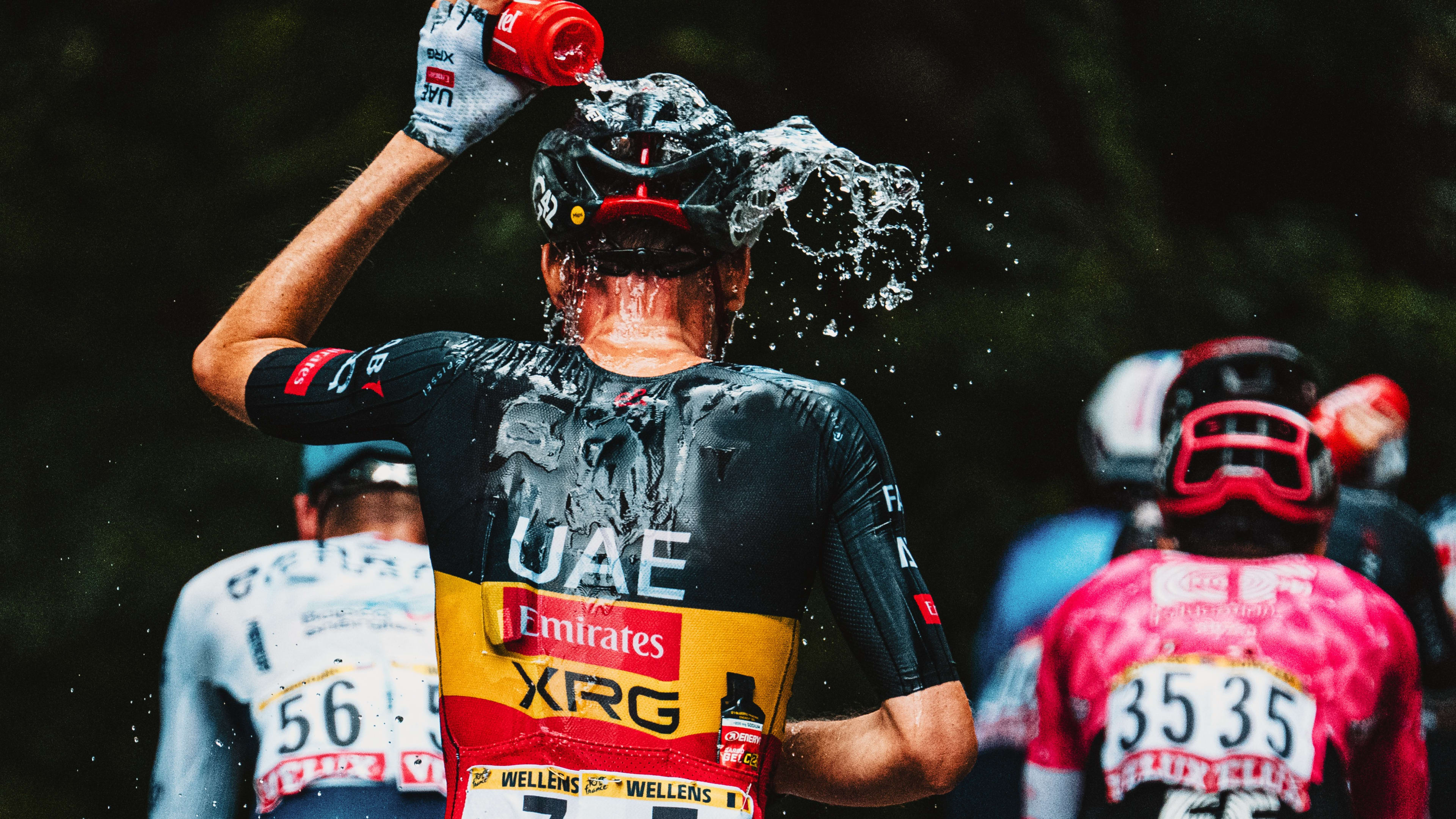
Demi Vollering just won her second Tour De France Femmes title, and she didn't do it on just one good day. She won it by showing up to stage nine as strong as stage one, and that comes down to how she was able to fuel day after day of racing.
Vollering took her second Tour De France Femmes title this year, covering 1,174.5 km from Lausanne to Nice. Across those nine stages, her team clocked her fueling at an average of 110g of carbohydrate per hour on the bike — a number that lines up with what we're seeing across the WorldTour as teams push riders toward higher carb ceilings.
The numbers behind the win
It takes work, though. These numbers show you just how much.
9,050g of total carbohydrate over the nine days, including meals off the bike
3,450g of carbohydrate fueled during racing across all nine stages
110g/hour average carb intake during race stages
Broken down by product, her in-race fueling looked like this:
Drink Mix 160 — 47 bottles
Drink Mix 320 — 9 bottles
Gel 100 — 20 sachets
Gel 160 — 10 sachets
Gel 100 Caf 100 — 6 sachets
It's clear Demi was leaning on a mix of drink mix as her base carb delivery and gels for the moments that call for something more — split-second decisions in the bunch, a late attack, the final kick into a mountain finish.
Testing before the Tour
Vollering's fueling plan for 2026 didn't start on stage one. It started back in January, when her team ran a five-hour test to measure how much of the carbohydrate she consumes during exercise she can actually put to use — a metric known as exogenous carbohydrate oxidation.
The protocol: four hours riding outdoors followed by one hour on the trainer, taking in 120g of carbs per hour via Drink Mix 320. The point of stacking that much time on the bike before the real test begins is to load the cardiovascular, muscular, and digestive systems the same way a hard stage would, so the data reflects race conditions instead of a fresh, rested body.
The indoor hour included a step test — a set of efforts at climbing intensities with short breaks between them. Those breaks served two purposes: checking blood lactate and giving Vollering a window to fuel without a mask in the way.
During that final hour, her team collected her expired CO2 through breath bags. Because the carbohydrate in Drink Mix carries a ¹³C isotope tracer, that CO2 sample tells the team exactly how much of what she's burning is coming from the drink mix versus her own glycogen stores. Paired with doubly labeled water testing to nail down her total daily energy needs, the data lets her nutrition team dial in both her day-to-day intake and her in-race fueling plan with real numbers instead of guesswork.
Elsa Hugot, team nutritionist for FDJ-Suez, put it simply: staying out of an energy deficit on any single stage is the difference between recovering in time for the next one and digging a hole you can't climb out of over nine days of racing.
Why it matters for you
You're not racing the Tour De France Femmes, but the principle scales down for all of us: consistent carb intake, tested and dialed in ahead of time, is what lets you hold your output on the second, third, or forth day of a multi-day event instead of fading. Whether that's a stage race, a multi-day gravel trip, or back-to-back long training days, the products doing the work for Vollering are the same ones on our shelves.