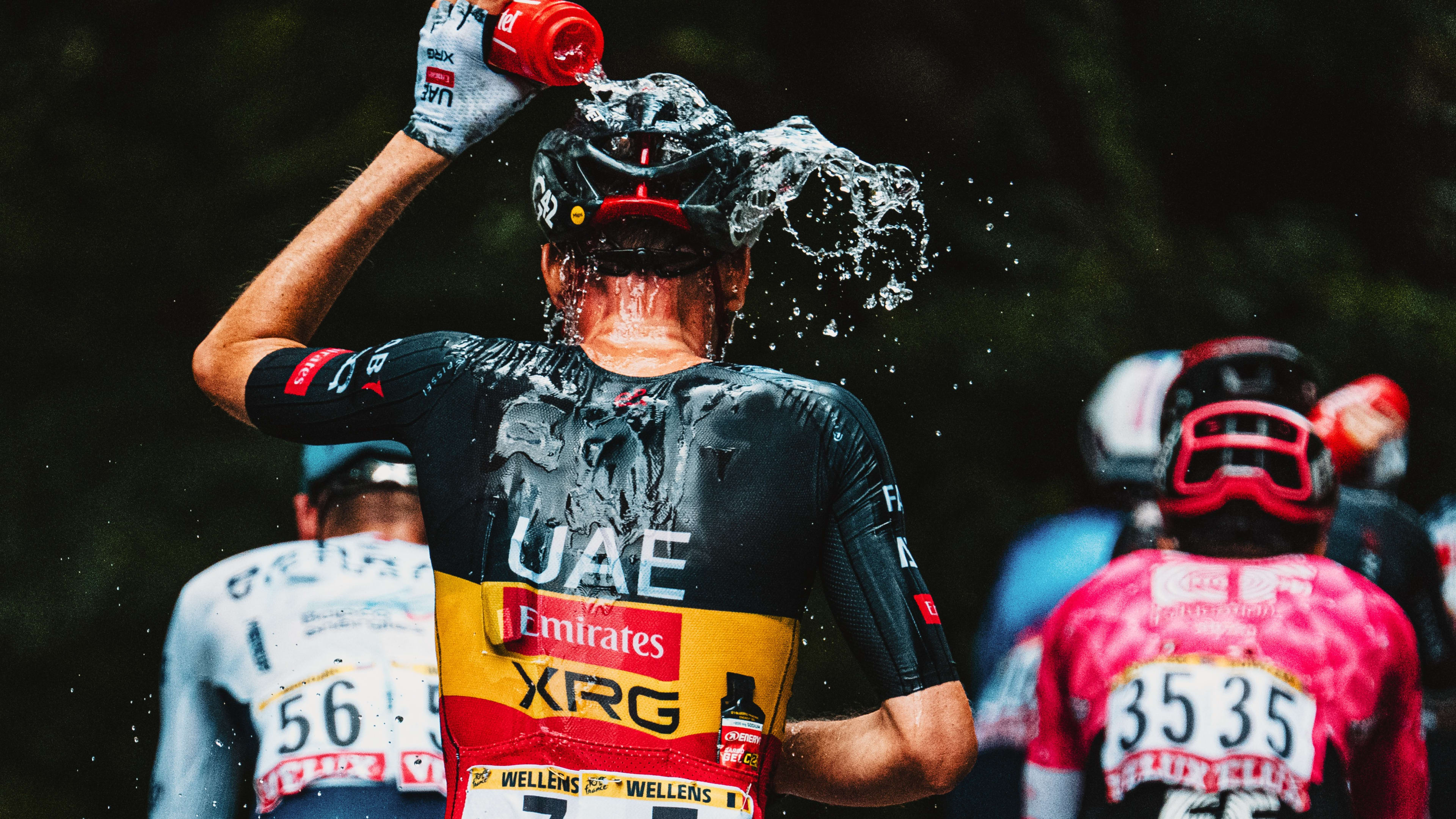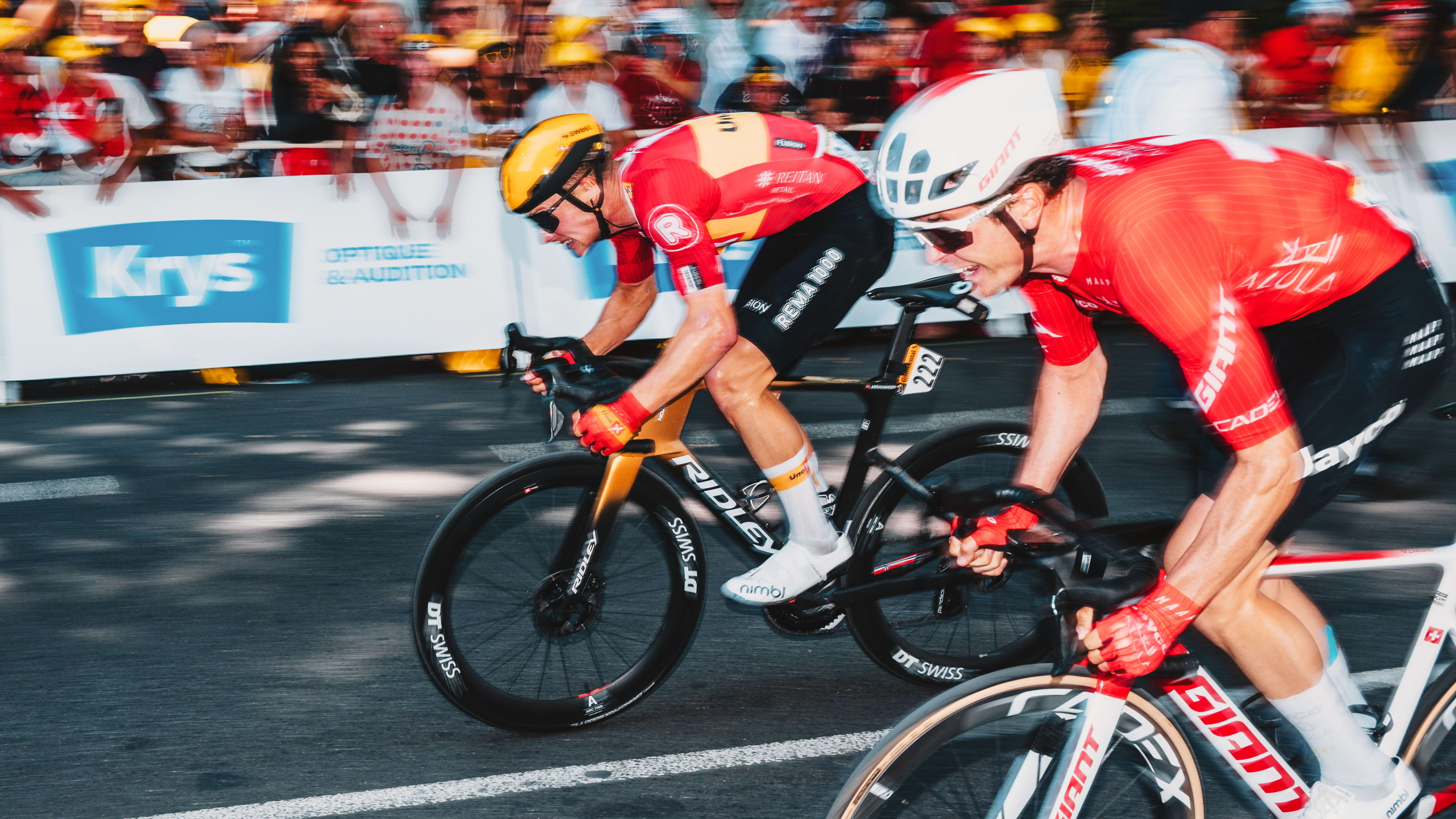
The Tour doesn't just crown the world's best cyclist every July. It stress-tests the limits of human fueling. This is what the last decade taught us.
Remember when Tour riders stuffed baguettes into their jersey pockets?
We are not exaggerating. Mid-race, full meal stops. Riders would roll up to a roadside café, eat, and roll out. That was the job.
Over the last decade, elite cycling went through a quiet revolution in fueling — and the TDF was the proving ground. A few years ago, 60 grams of carbs per hour was the ceiling. Push past it and you'd meet the dreaded, race-ending GI distress. The kind that ends your day somewhere on the side of a mountain in France.
Today? The best riders at the Tour are pushing 120+ grams an hour. Consistently. And they're holding intensities at the end of stages that simply weren't possible before.
Here's the part nobody talks about: it's a lot less chewing and a lot more slurping.
Why liquid changed everything — and why 120g is now possible
For years, the 60g ceiling wasn't arbitrary. It was actually believed to be a physiological limit. Your gut uses transporters to pull carbohydrates out of your digestive tract and into your bloodstream. The problem: glucose, the carb your body runs on, uses only one of those transporters, called SGLT1. And SGLT1 maxes out at around 60g per hour. Push more glucose past it and you don't get more energy. You get GI distress.
The breakthrough was realizing your gut has a second transporter — GLUT5 — that handles fructose. And crucially, it operates on an entirely separate pathway from SGLT1. Use both at the same time and you've effectively doubled your gut's capacity to absorb carbs.
That's the science behind the 2:1 ratio you see on high-carb products: two parts glucose to one part fructose, each running through its own lane. Combined, the gut can handle 90, 100, even 120+ grams per hour without the backup that causes cramping, bloating, or worse.
The Tour peloton figured this out. Now it's standard issue.
The shift to liquid made it practical
Gels used to be the default. Fifteen of them stuffed into a jersey pocket for a single stage. Now the best-fueled riders are riding with one or two as backup while pulling from a high-carb bottle all day. Steadier energy, fewer spikes, less GI risk — and liquid carbs cost roughly a third of what gel carbs cost per gram. The math isn't complicated.
Our approach: mix a neutral high-carb powder with your favorite flavored hydration. One bottle, two jobs — carbs and electrolytes handled simultaneously.
One catch: your gut is a muscle.
You have to train it like one. Don't jump to 120g overnight. Definitely don't try it for the first time on race day. Ramp up slowly in training. Mix liquid carbs with a gel or a chew as you build. Rotate flavors — sweet, sour, neutral — to dodge flavor fatigue before it costs you.
The Tour proved this approach works at the highest level. Now it's yours to use.